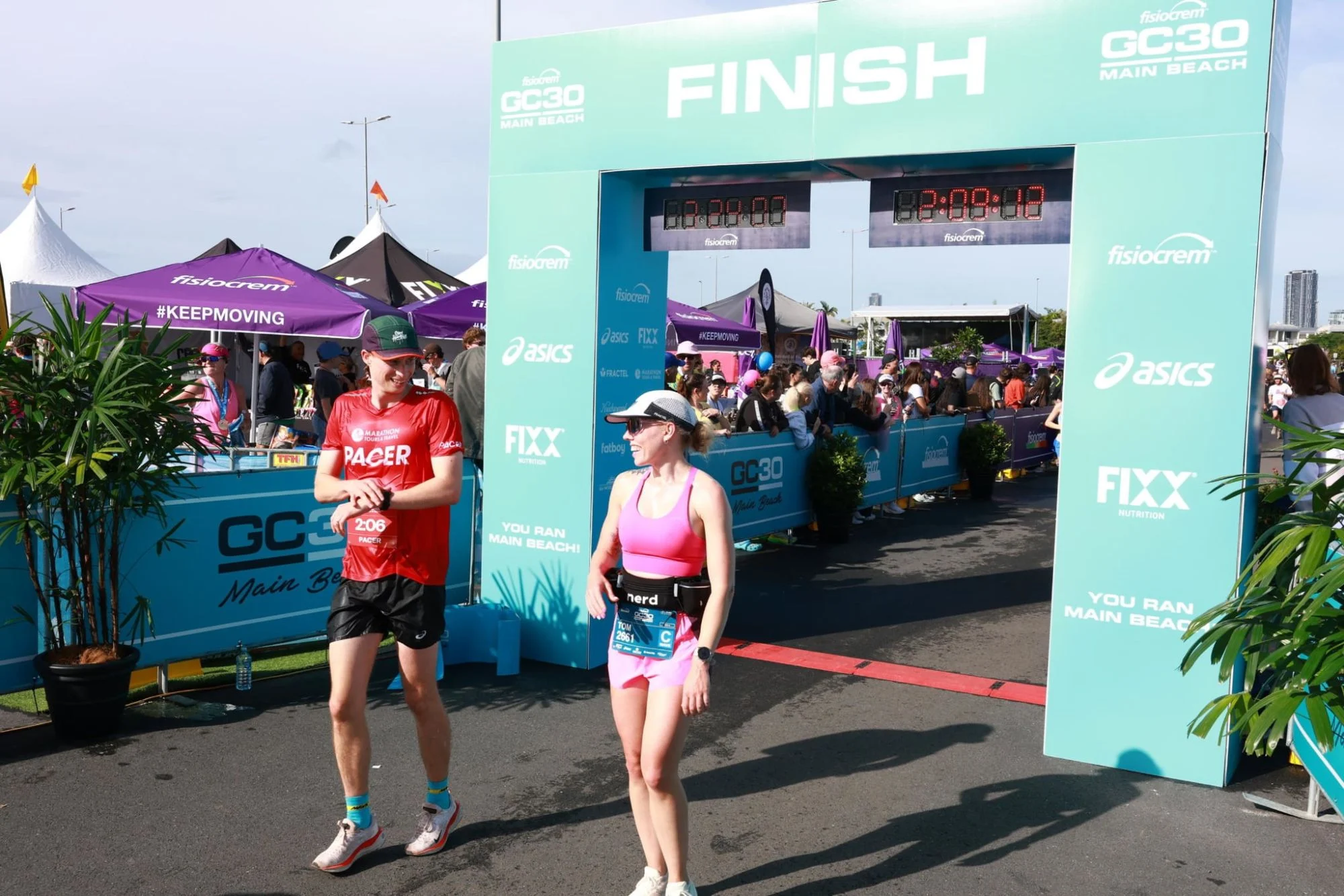
If you run the hills on Tamborine Mountain long enough, there is a good chance your Achilles will complain at some point. The steep climbs ask your calf and Achilles to lift your whole body weight up the slope, stride after stride, and the descents add load of their own.
Achilles tendinopathy is one of the most common running injuries. It is also one of the most mismanaged: the usual advice is to rest, stretch and wait, and the pain comes straight back the first time you run again.
This guide sets out what the current clinical practice guideline and the best trials say, so you can treat it properly.
Important: this is general information, not a diagnosis. If you felt a sudden snap or a kick in the back of the leg and now can’t push up onto your toes, see a doctor the same day. That can be an Achilles rupture, which needs urgent assessment.
What Achilles tendinopathy is
The Achilles tendon joins your calf muscles to your heel bone. It is the strongest tendon in the body, and when you run it handles forces of several times your body weight with every step.
Tendinopathy is the term for a painful tendon that has lost some of its capacity to handle load. It is not primarily an inflammatory condition, which is why rest and anti-inflammatories so often disappoint. The tendon has been asked to do more than it was ready for, and it needs to be rebuilt.
There are two main types:
- Midportion tendinopathy: pain and often thickening 2–7 cm above the heel. This is the classic runner’s Achilles.
- Insertional tendinopathy: pain right where the tendon attaches to the heel bone. It is managed a little differently, especially around stretching and uphill running, so getting the diagnosis right matters.
Typical features are morning stiffness that eases as you warm up, pain at the start of a run that may settle mid-run and then return worse afterwards, and tenderness when you squeeze the tendon.
Why it happens to runners
Tendons adapt to load, but more slowly than muscle and fitness. Most Achilles problems follow a change: more kilometres, more hills, faster sessions, a new shoe, a return after time off, or simply getting older while the training stays the same. The capacity of the tendon falls behind the demand.
On Tamborine Mountain, that change is often hills. A runner who moves from flat roads to the Curtis Falls and Witches Falls trails, or starts training for a hilly event, has just asked the calf and Achilles to do a lot more work.
What the guideline recommends
The most comprehensive guideline for physiotherapy management is the 2024 revision of the Academy of Orthopaedic Physical Therapy’s clinical practice guideline on midportion Achilles tendinopathy (Chimenti et al., 2024). Its central recommendation is resistance exercise that progressively loads the calf and tendon, supported by education about load management. It advises against relying on passive treatments such as therapeutic ultrasound or laser on their own.
The guideline also makes the point that a diagnosis is mostly clinical: imaging isn’t needed for most people and is reserved for cases that aren’t behaving as expected.
Loading, not resting
Heavy slow resistance works as well as the classic programme
For years the standard treatment was the eccentric heel-drop programme: 180 slow heel drops a day, every day, for 12 weeks. It works, but it is time-consuming and many people don’t stick with it.
A Danish trial compared it with heavy slow resistance training: three sessions a week of heavier, slower calf raises, with the load increasing and repetitions dropping as the weeks progressed. Both groups of patients with chronic midportion Achilles tendinopathy improved substantially over 12 weeks, with no difference in clinical outcomes between them, and both groups showed reduced tendon thickness. Satisfaction was higher in the heavy slow resistance group at 12 weeks, although not at one year (Beyer et al., 2015).
The practical message is that the tendon needs genuine load, progressed over time, and there is more than one way to deliver it. Three solid sessions a week is a lot easier to fit into life than daily heel drops.
You can usually keep running
One of the most useful trials for runners tested whether you need to stop running at all. In a Swedish study, one group continued running and jumping during rehab, guided by a pain-monitoring model, while the other group rested from those activities for six weeks. Both groups did the same tendon-loading programme. The group that kept running did just as well, and the researchers found no negative effects from continuing (Silbernagel et al., 2007).
The pain-monitoring model is simple and is the rule we use with runners:
- Pain during running or exercise is acceptable up to about 5 out of 10.
- Pain should settle after the session, and should not be worse the following morning.
- If morning stiffness or pain is worse the next day, the load was too much, so you scale back.
This lets most runners keep some running throughout rehab, which protects fitness and, just as importantly, morale.
What good Achilles rehab looks like
- Calm it down if it’s very irritable. Reduce the aggravating load (often hills, speed work and long runs) rather than stopping completely. Isometric calf holds can ease pain enough to keep training.
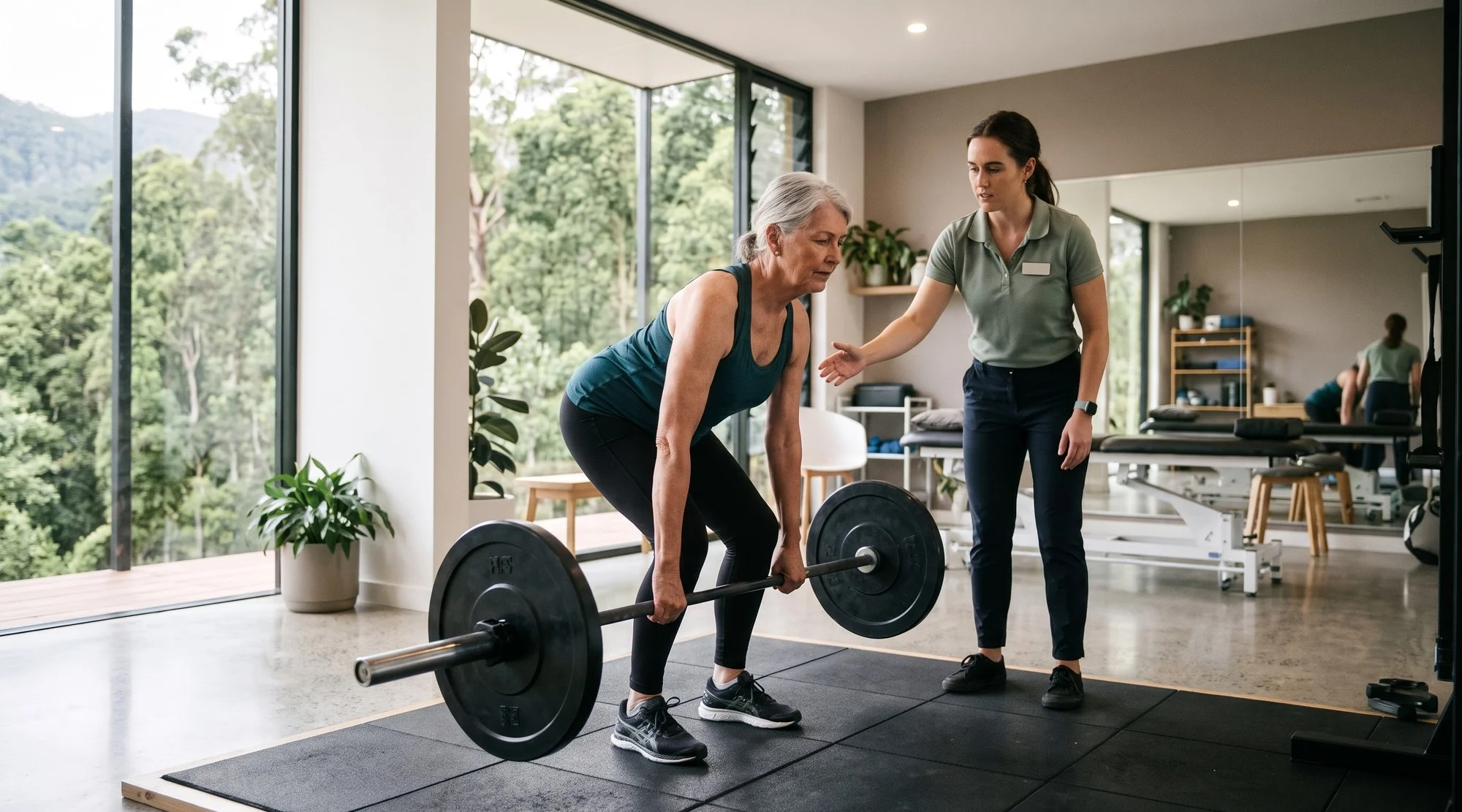
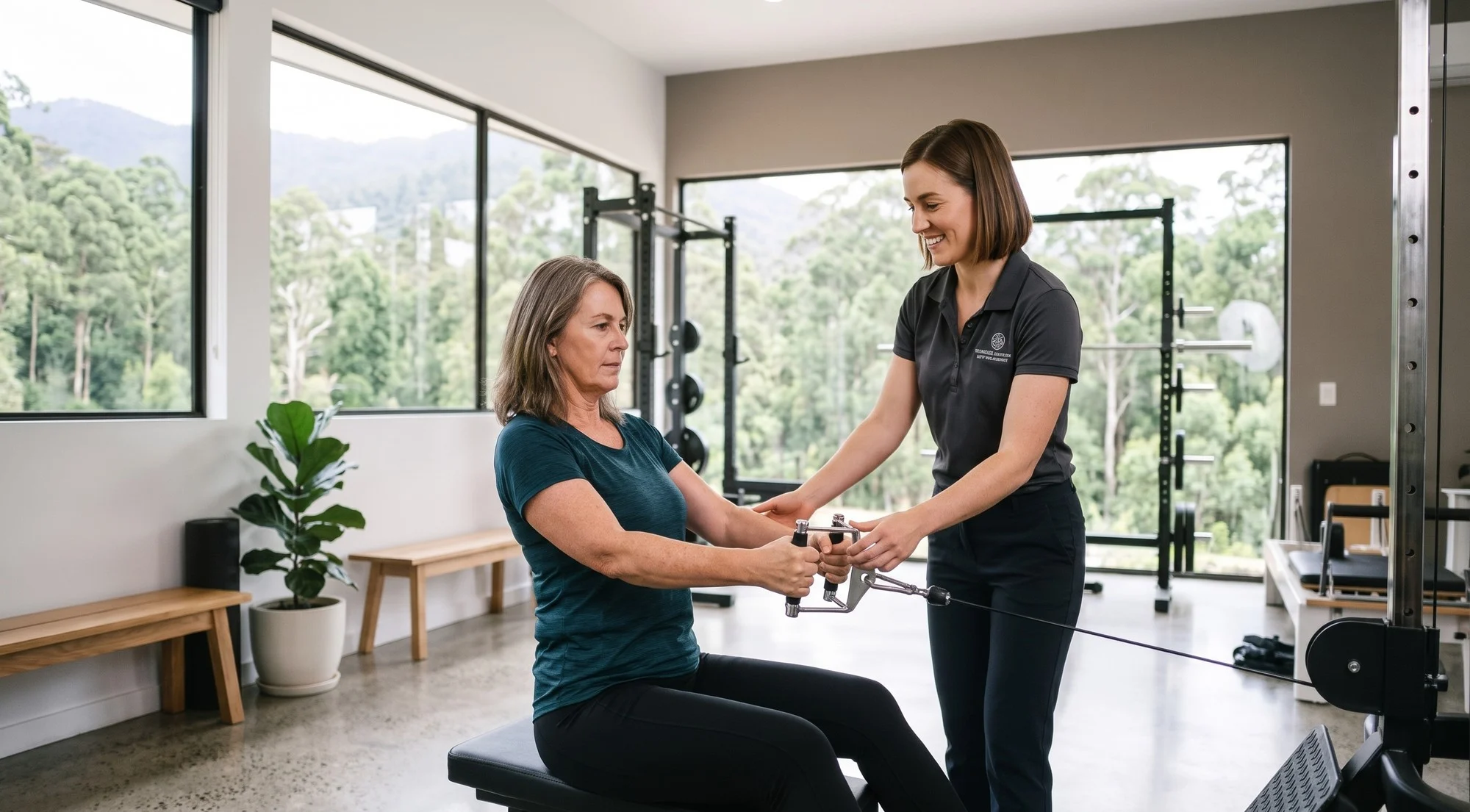
- Build calf strength progressively. Calf raises on a step, first double then single leg, then with weight. Seated calf raises for the soleus, which takes a large share of the load when running. Slow and heavy, three times a week.
- Add speed and spring. Once strength is good, add skipping, hopping and bounding drills so the tendon can handle the fast, springy loads of running again.
- Return to hills and pace gradually. Hills and speed sessions come back last, one variable at a time.
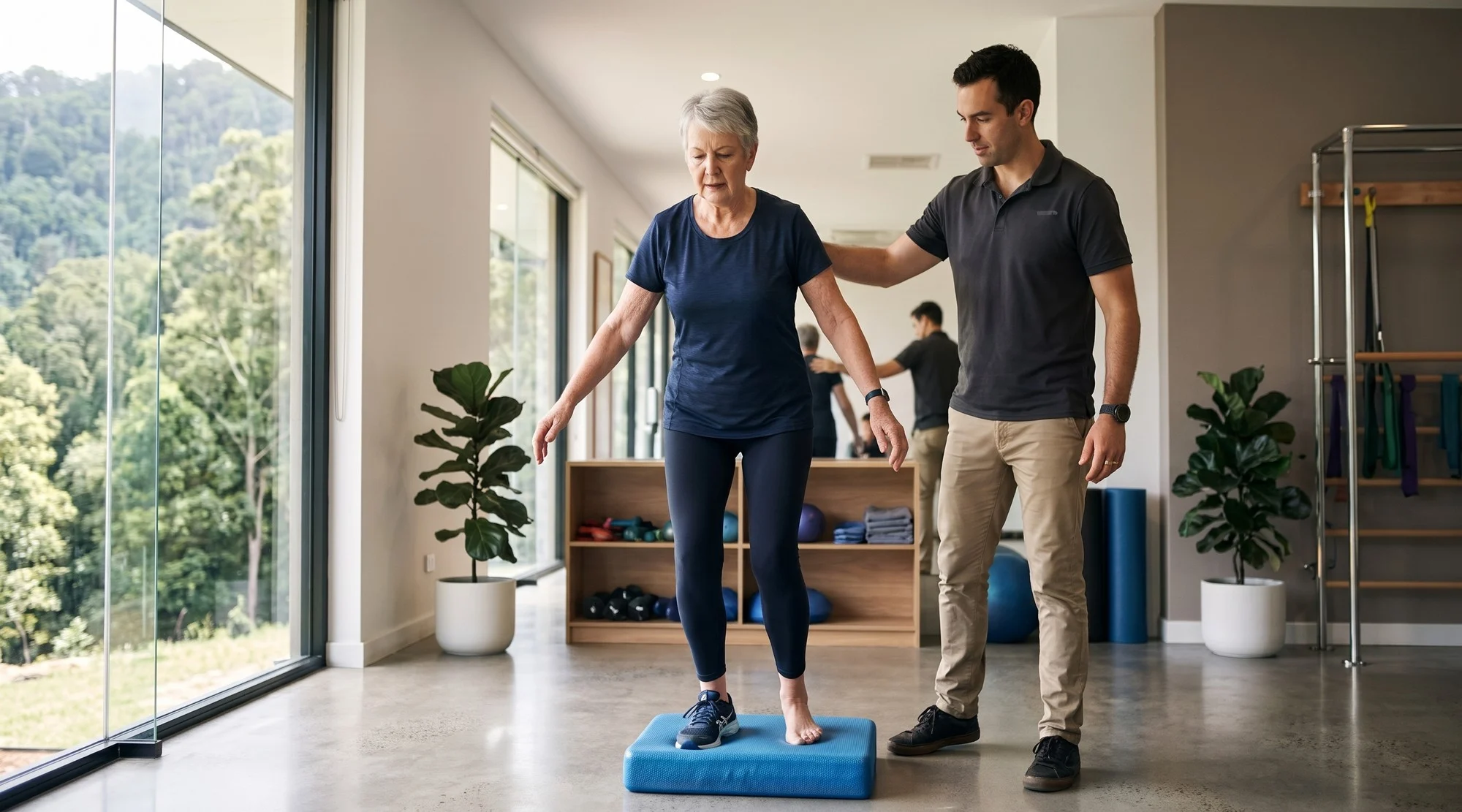
- Look at the whole leg. Weak glutes and hips and poor control on single-leg stance push more work onto the calf. We test these too.
Most people need around 12 weeks of consistent loading to see a real change in the tendon, and longer-standing cases can take longer. A clear plan and regular testing (for example, how many single-leg calf raises you can do compared with the other side) shows whether you’re on track.
What doesn’t help much
- Complete rest: pain settles, capacity falls further, and the pain returns when you start again.
- Stretching alone: it may feel good, but on its own it doesn’t rebuild the tendon. For insertional tendinopathy, aggressive stretching into dorsiflexion can make things worse.
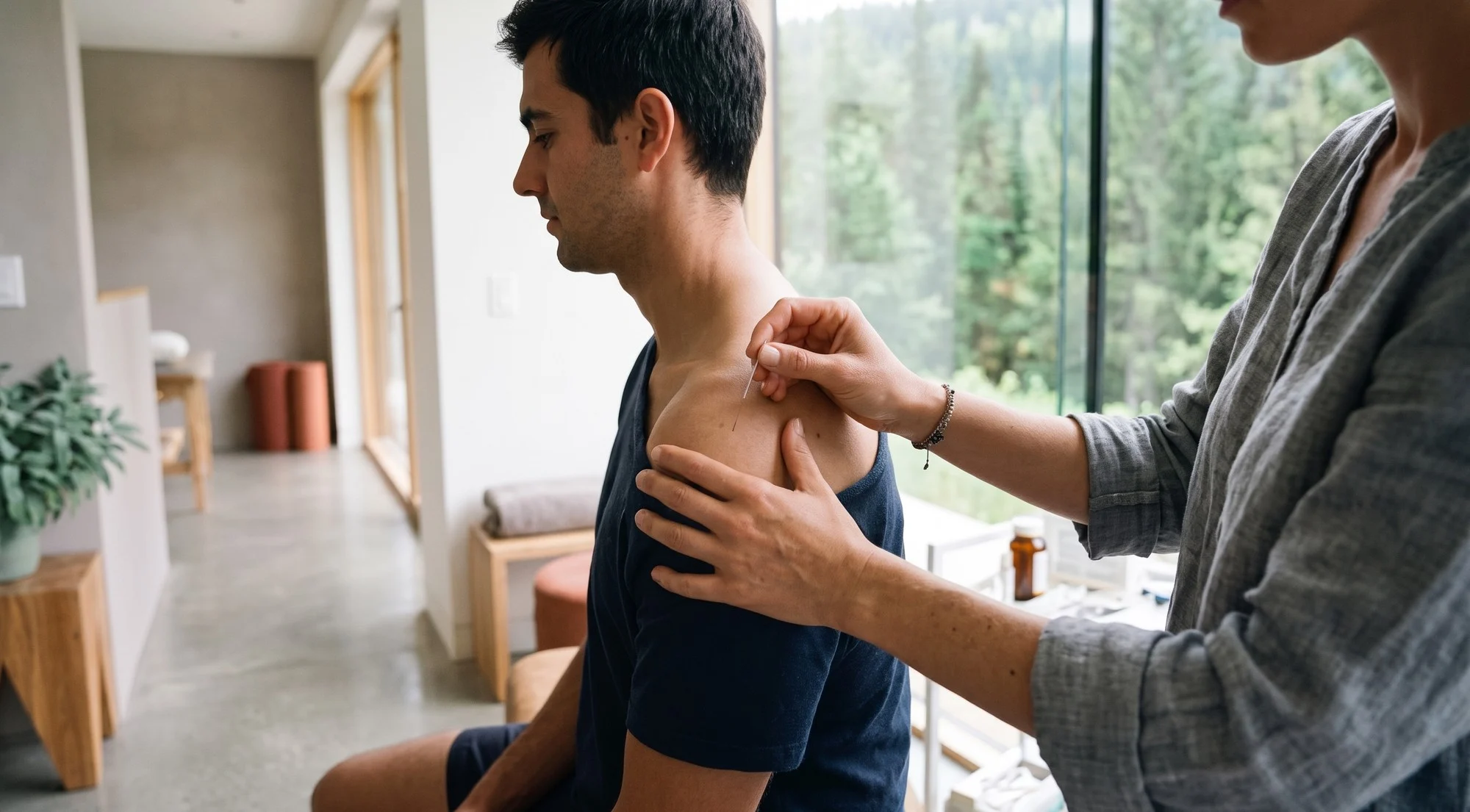
- Passive treatments on their own: ultrasound and laser aren’t recommended as stand-alone treatments in the guideline. Hands-on treatment or dry needling can help with pain, but only as part of a loading plan. If you’re being offered an injection, read Dry Needling and PRP Injections: How to Think About the Choice first.
Why calf strength matters beyond running
Calf strength is one of the first things to fade with age, and it is closely linked to walking speed, balance and the ability to catch yourself when you trip. Restricted ankle movement makes it worse, as we explain in Ankle Dorsiflexion: The 10 Degrees That Decide Whether You Trip. Rebuilding a strong calf after an Achilles problem is a long-term investment, and fast, springy work also builds the power we discuss in Train Fast, Not Just Heavy.
Frequently asked questions
Should I stop running with Achilles tendinopathy? Usually not completely. Using the pain-monitoring model, most runners can keep some running while they rehab, provided pain stays at or below about 5/10 and isn’t worse the next morning.
How long does Achilles tendinopathy take to heal? With consistent progressive loading, most people improve substantially over about 12 weeks, but stubborn or long-standing cases can take several months.
Is it OK to stretch my Achilles? Gentle calf stretching is fine for many people, but it doesn’t replace strengthening. If your pain is right at the heel bone (insertional), avoid deep stretches over the edge of a step.
Do I need a scan? Most people don’t. Diagnosis is clinical, and imaging is useful mainly when the picture is unclear or recovery is slower than expected.
Are new shoes the answer? Shoes can change how load is shared between the calf, Achilles and knee, so a big change in shoes can trigger symptoms. But shoes alone rarely fix a tendon that has lost capacity.
Running strong on Tamborine Mountain
If you’re a runner with a sore Achilles, a thorough assessment will confirm the type of tendinopathy, measure your calf strength side to side, and set out a plan that keeps you running where possible. Once you’re back on the trails, our Run Strong classes build the strength that helps stop it coming back. You can also see our physiotherapy services and the full conditions we treat.
Longevity Physio Studio, Unit 2, 44 Southport Avenue, Tamborine Mountain QLD 4272. Open Monday 6am–5pm, Tuesday 7:30am–5pm and Friday 8am–4pm, with home visits across Mt Tamborine, Canungra, Jimboomba, Beaudesert and Beechmont. Call 0477 012 967 or book online.
Book an Achilles AssessmentRelated reading
- Plantar Heel Pain: Your Foot Is Your Fall-Prevention Foundation
- Patellofemoral Pain (Runner’s Knee): What Actually Fixes It
- Ankle Dorsiflexion: The 10 Degrees That Decide Whether You Trip
- Train Fast, Not Just Heavy: Power Fades Twice as Quickly as Strength
References
- Chimenti RL, Neville C, Houck J, et al. Achilles pain, stiffness, and muscle power deficits: midportion Achilles tendinopathy revision – 2024. J Orthop Sports Phys Ther. 2024;54(12):CPG1–CPG32. doi:10.2519/jospt.2024.0302
- Beyer R, Kongsgaard M, Hougs Kjær B, et al. Heavy slow resistance versus eccentric training as treatment for Achilles tendinopathy: a randomized controlled trial. Am J Sports Med. 2015;43(7):1704–1711. doi:10.1177/0363546515584760
- Silbernagel KG, Thomeé R, Eriksson BI, Karlsson J. Continued sports activity, using a pain-monitoring model, during rehabilitation in patients with Achilles tendinopathy: a randomized controlled study. Am J Sports Med. 2007;35(6):897–906. doi:10.1177/0363546506298279
Written by Dave Cvelbar, physiotherapist (AHPRA PHY0002223680), Longevity Physio Studio. Reviewed November 2026.