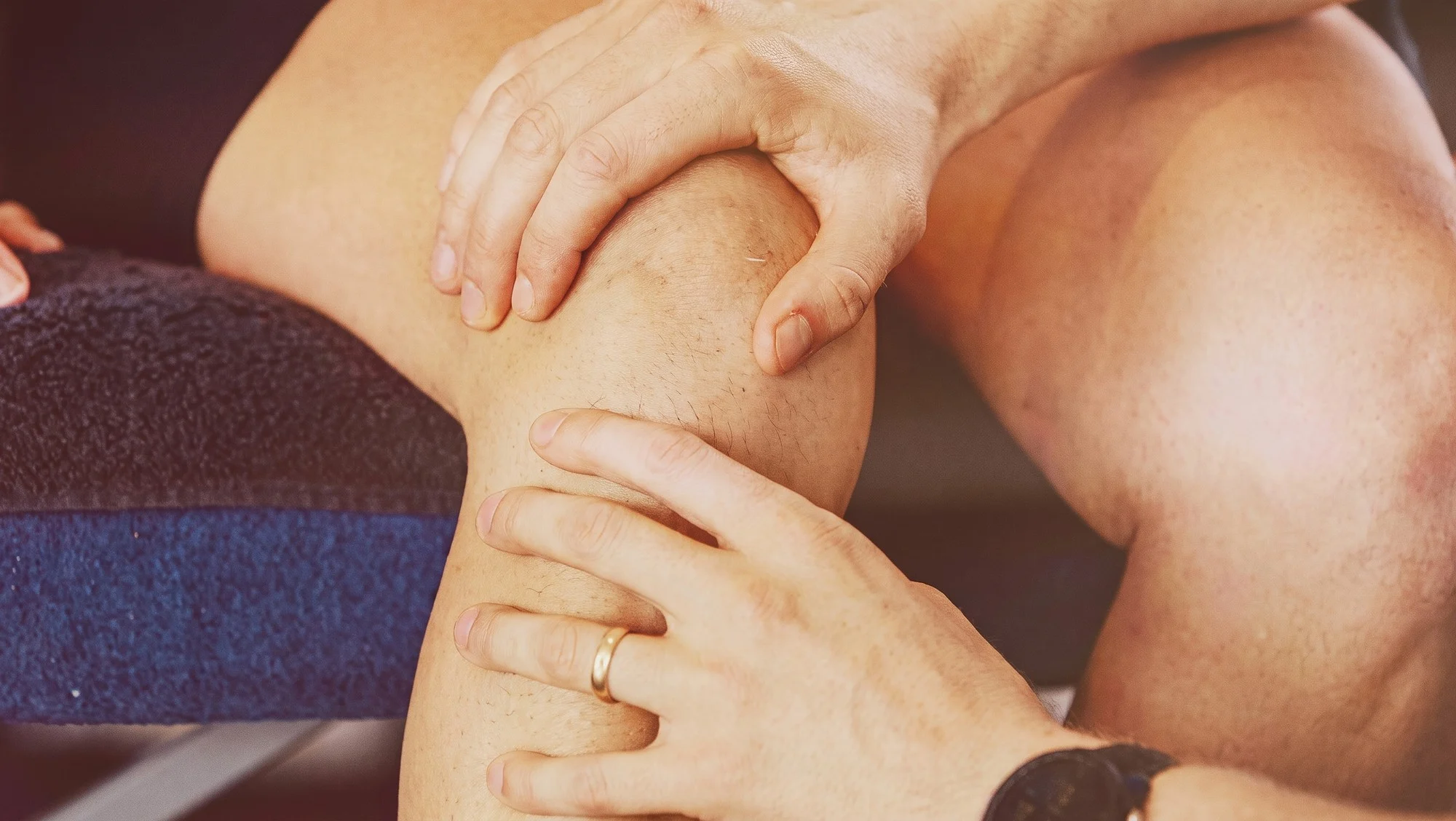
Pain around or behind the kneecap. Worse going down stairs, squatting, running downhill, or standing up after sitting through a film. Often no single injury, just a gradual build-up. That is the classic picture of patellofemoral pain, also called runner’s knee or anterior knee pain.
It is one of the most common knee problems in active people of every age, from teenagers to masters runners. On Tamborine Mountain, the steep descents make it especially common: running or walking downhill puts large loads through the front of the knee.
The good news is that the treatment with the best evidence is something you can do yourself, with the right guidance.
Important: this is general information, not a diagnosis. A knee that swells quickly after an injury, locks, gives way, or can’t bear weight needs a proper assessment.
What patellofemoral pain is
The patellofemoral joint is where the back of the kneecap glides over the groove at the end of the thigh bone. Patellofemoral pain is pain around or behind the kneecap that is brought on by activities that load this joint while the knee is bent: squatting, stairs, hills, running, jumping and prolonged sitting (Crossley et al., 2016).
It is usually a load-capacity problem. The joint and surrounding tissues have become sensitised because the load going through them has outpaced what they are currently conditioned for. Scans are rarely needed and often show little.
Common triggers include:
- A jump in running distance, hills or speed work
- Lots of downhill walking or running
- A return to sport after time off
- Weakness in the quadriceps and the hip muscles that control the knee
What the international consensus recommends
A panel of patellofemoral pain experts met on the Gold Coast in 2017 and reviewed the evidence for every common treatment. Their consensus statement makes clear recommendations (Collins et al., 2018):
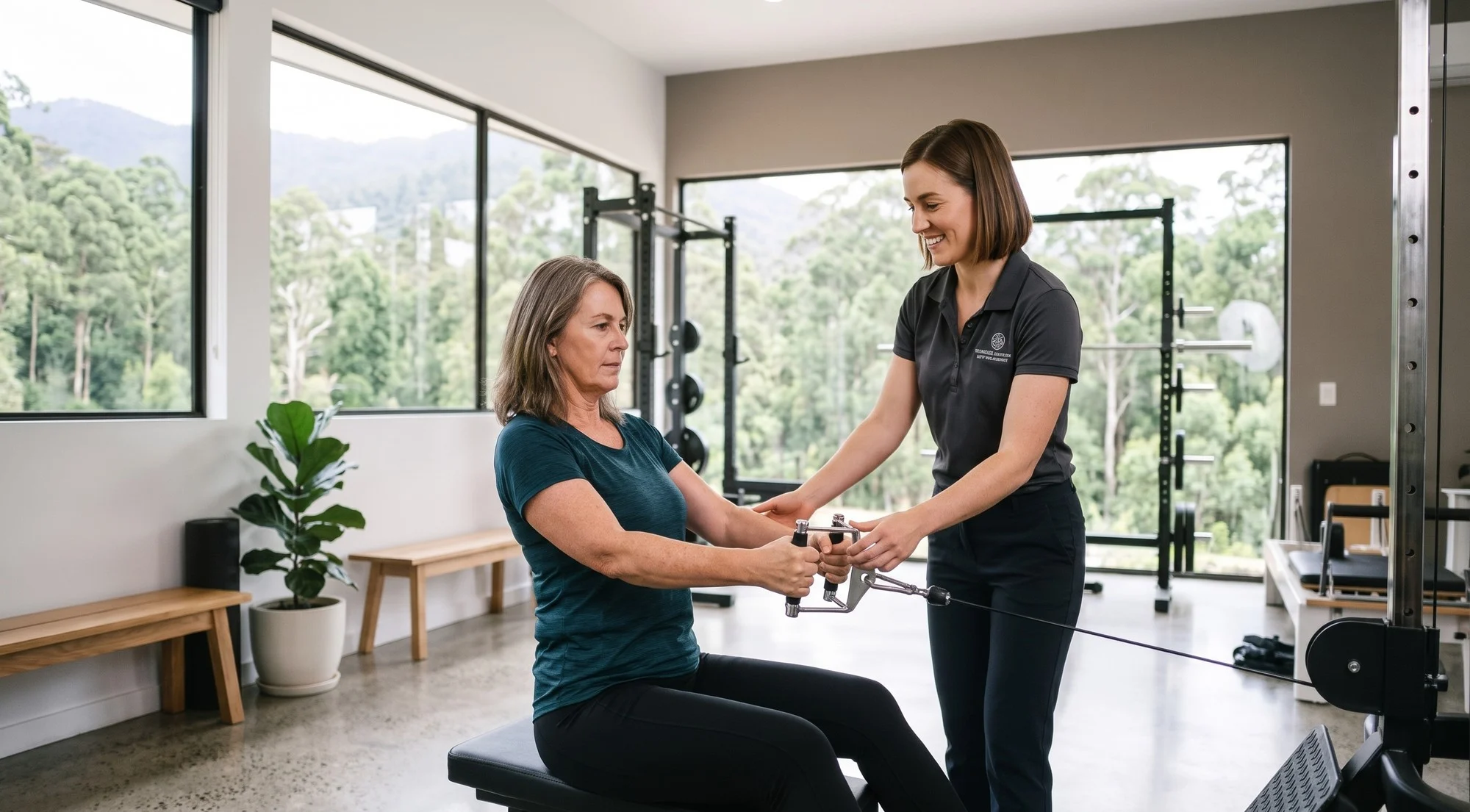
- Exercise therapy is recommended to reduce pain and improve function in the short, medium and long term.
- Combining hip-focused and knee-focused exercise is preferred over knee exercise alone.
- Combined treatments (exercise plus, for example, foot orthoses or taping) can be used.
- Foot orthoses are recommended for short-term pain relief in some people.
- Mobilisations on their own (to the knee, kneecap or lower back) and electrophysical agents such as ultrasound are not recommended.
- There is uncertainty about taping and bracing, dry needling, soft-tissue techniques, blood-flow-restriction training and gait retraining.
In short: strength is the treatment. Everything else is a possible add-on.
What good rehab looks like
1. Settle the knee. Reduce the most provocative loads for a while: downhill running, deep squats, long runs and high-volume stairs. Keep moving with activities the knee tolerates. Use a simple rule: some pain during exercise is acceptable if it settles quickly and isn’t worse the next day.
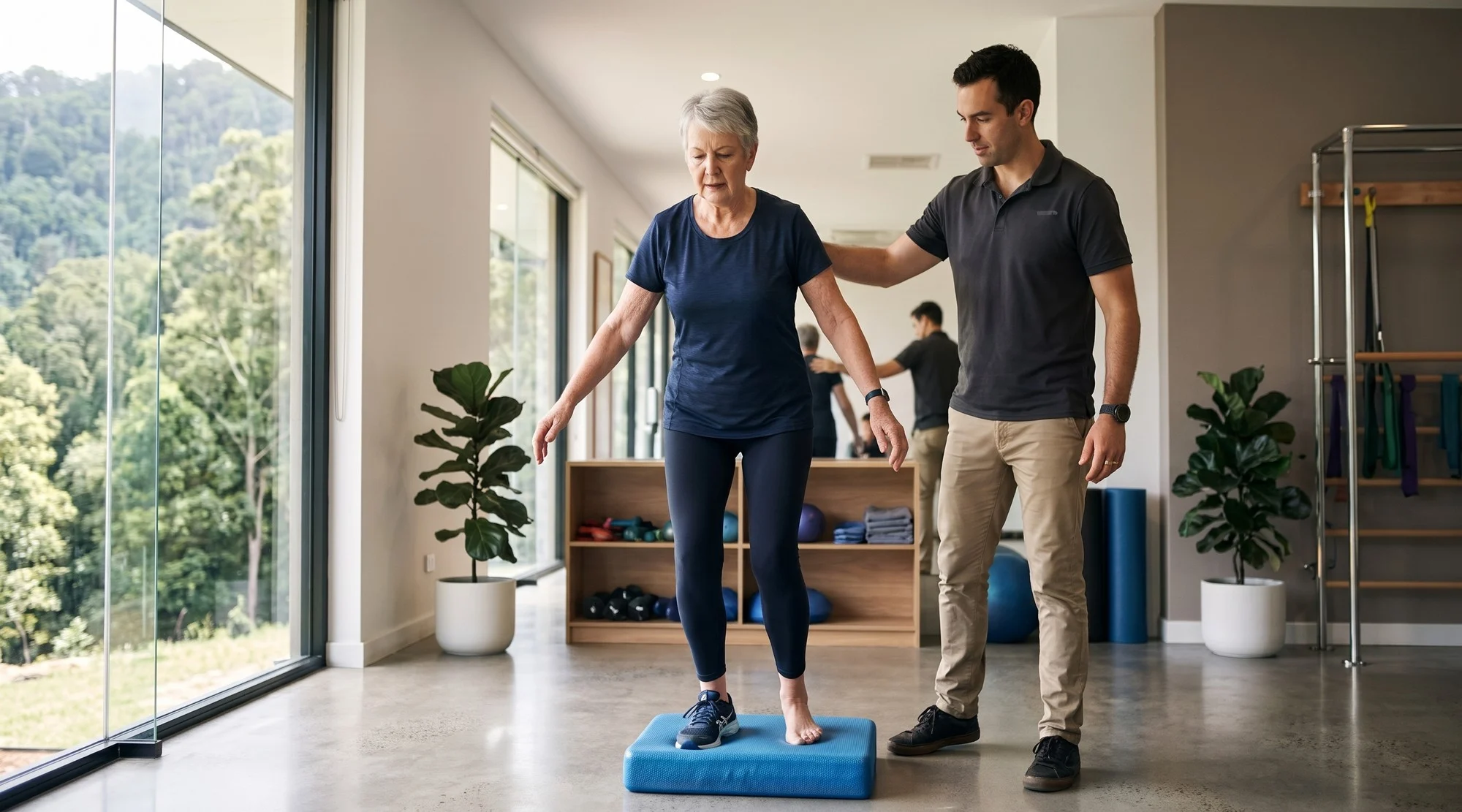
2. Strengthen the hips. Hip abduction and external rotation exercises, bridges, side planks and single-leg work build the muscles that stop the knee collapsing inwards.
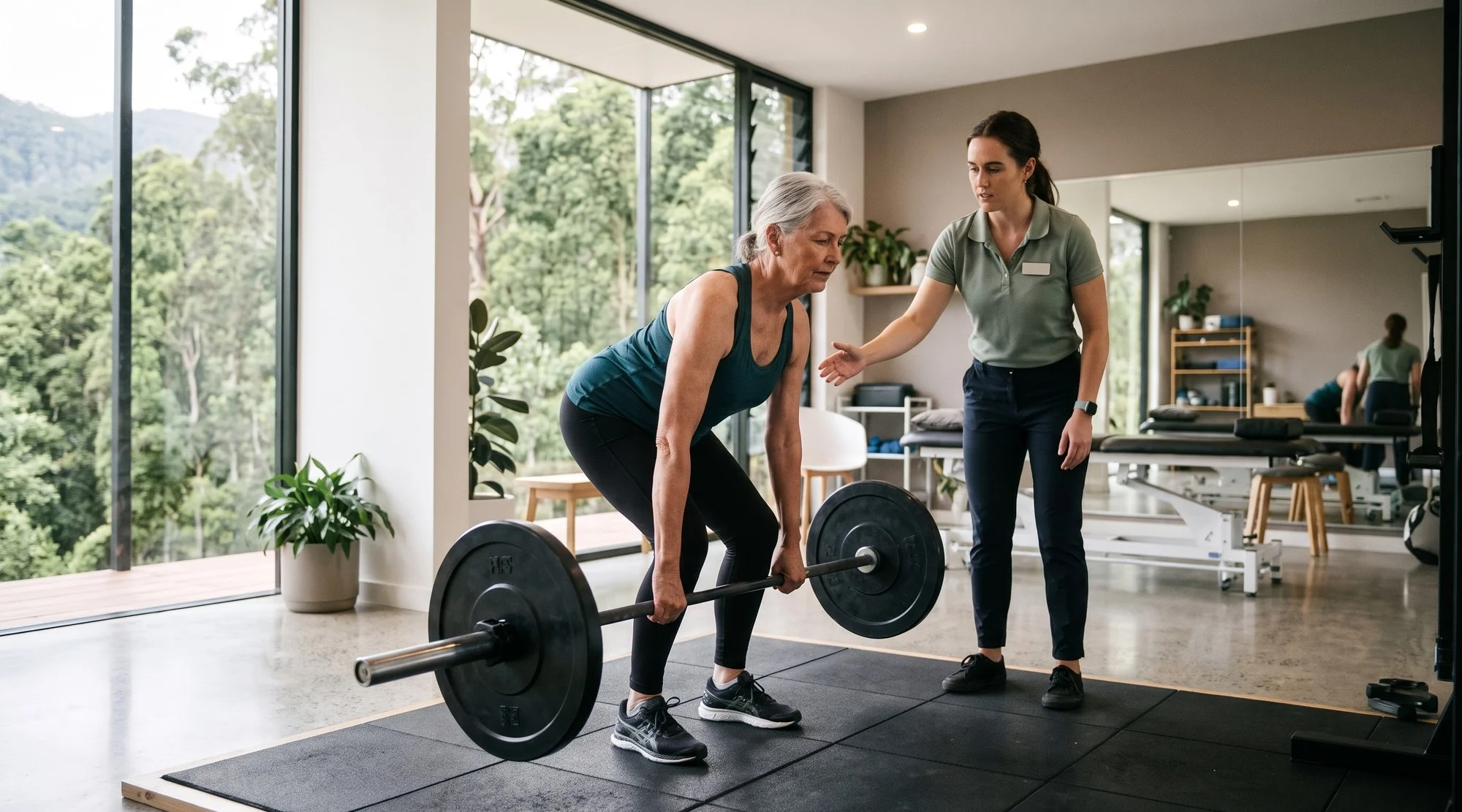
3. Strengthen the quadriceps. Start with knee-friendly options such as wall sits, leg press in a comfortable range and step-ups, then progress depth and load. The quadriceps are the knee’s main shock absorber, so this matters.
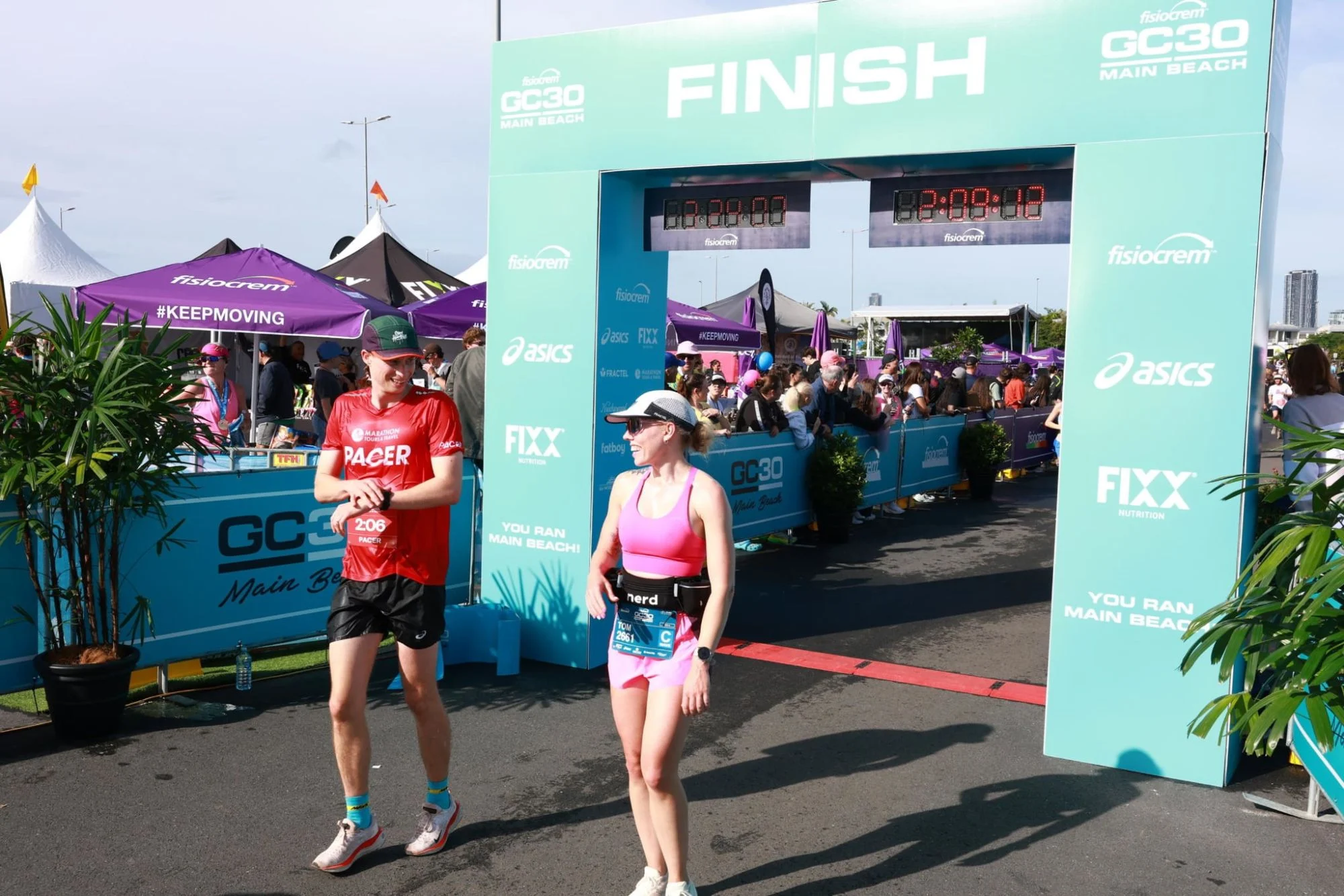
4. Rebuild running and hills. Increase running gradually, then reintroduce downhill running and speed last. Small changes, such as a slightly higher step rate, can reduce knee load for some runners, although the evidence for gait retraining is still uncertain.
5. Keep training once it settles. Patellofemoral pain is known for coming back when people stop their strength work. A small amount of maintenance training is the best insurance.
Most people see meaningful improvement within 6 to 12 weeks of consistent strengthening. Long-standing cases take longer, so a clear plan and regular testing help you stay on track.
How this fits with other knee problems
Patellofemoral pain is different from knee osteoarthritis, although in older adults the two can overlap. If you’ve been told your knee is “bone on bone”, read “Bone on Bone”: The Four Words That End More Walking Careers Than Knee Arthritis Does and our broader knee pain guide.
Flexibility is a common distraction here. Tight muscles are rarely the root cause, as we explain in Stop Just Stretching: You Need Strength Too. And runners with knee pain often have calf and Achilles weakness too; see Achilles Tendinopathy in Runners.
Frequently asked questions
Should I stop running with runner’s knee? Not necessarily. Many people can keep running at a reduced distance and on flatter routes while they build strength, provided pain settles quickly and isn’t worse the next day.
Are squats bad for my knees? No. Squats are one of the main treatments, but the depth and load need to start where your knee is comfortable and progress from there.
Will a knee brace or tape fix it? They may ease pain for some people, but the consensus found uncertainty about their benefit. They work best as a short-term support while you strengthen.
Do I need a scan? Usually not. Patellofemoral pain is a clinical diagnosis, and imaging is reserved for knees that don’t behave as expected.
Can you get patellofemoral pain when you’re older? Yes. It affects adults of all ages, and in older adults it can coexist with knee osteoarthritis. The approach is the same: strengthen the hips and quadriceps.
Get your knee assessed on Tamborine Mountain
If the front of your knee is limiting your running, hiking or stairs, a thorough assessment will confirm the source and give you a strength plan that fits your goals. Runners can then move into our Run Strong classes. See also our physiotherapy services and the full list of conditions we treat.
Longevity Physio Studio, Unit 2, 44 Southport Avenue, Tamborine Mountain QLD 4272. Open Monday 6am–5pm, Tuesday 7:30am–5pm and Friday 8am–4pm, with home visits across Mt Tamborine, Canungra, Jimboomba, Beaudesert and Beechmont. Call 0477 012 967 or book online.
Book a Knee AssessmentRelated reading
- Knee Pain: Causes, Treatment and What the Evidence Says
- “Bone on Bone”: The Four Words That End More Walking Careers Than Knee Arthritis Does
- Achilles Tendinopathy in Runners: Why Rest Fails and Loading Works
- Stop Just Stretching: You Need Strength Too
References
- Collins NJ, Barton CJ, van Middelkoop M, et al. 2018 consensus statement on exercise therapy and physical interventions (orthoses, taping and manual therapy) to treat patellofemoral pain: recommendations from the 5th International Patellofemoral Pain Research Retreat, Gold Coast, Australia, 2017. Br J Sports Med. 2018;52(18):1170–1178. doi:10.1136/bjsports-2018-099397
- Crossley KM, Stefanik JJ, Selfe J, et al. 2016 patellofemoral pain consensus statement from the 4th International Patellofemoral Pain Research Retreat, Manchester. Part 1: terminology, definitions, clinical examination, natural history, patellofemoral osteoarthritis and patient-reported outcome measures. Br J Sports Med. 2016;50(14):839–843.
Written by Dave Cvelbar, physiotherapist (AHPRA PHY0002223680), Longevity Physio Studio. Reviewed November 2026.