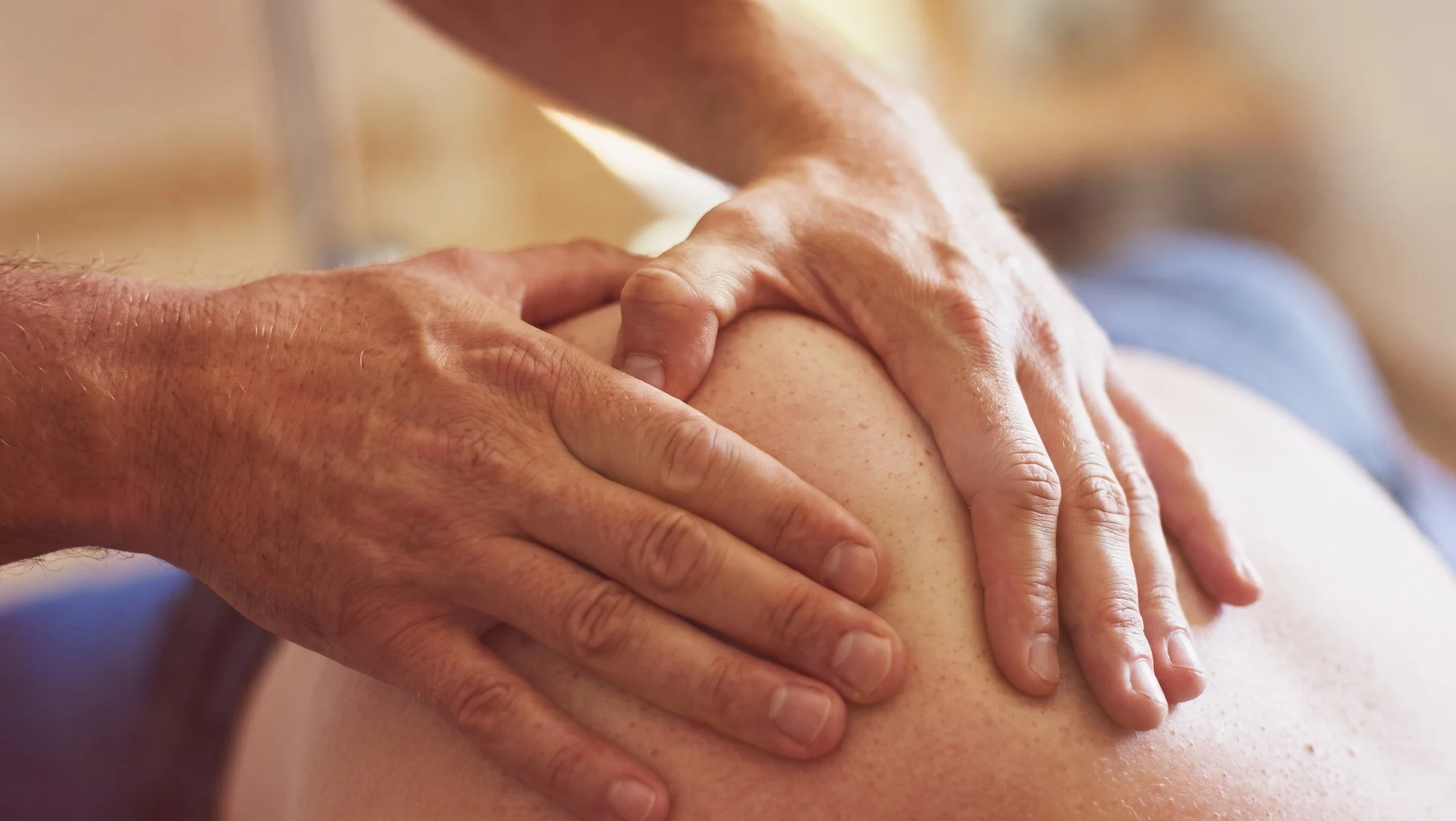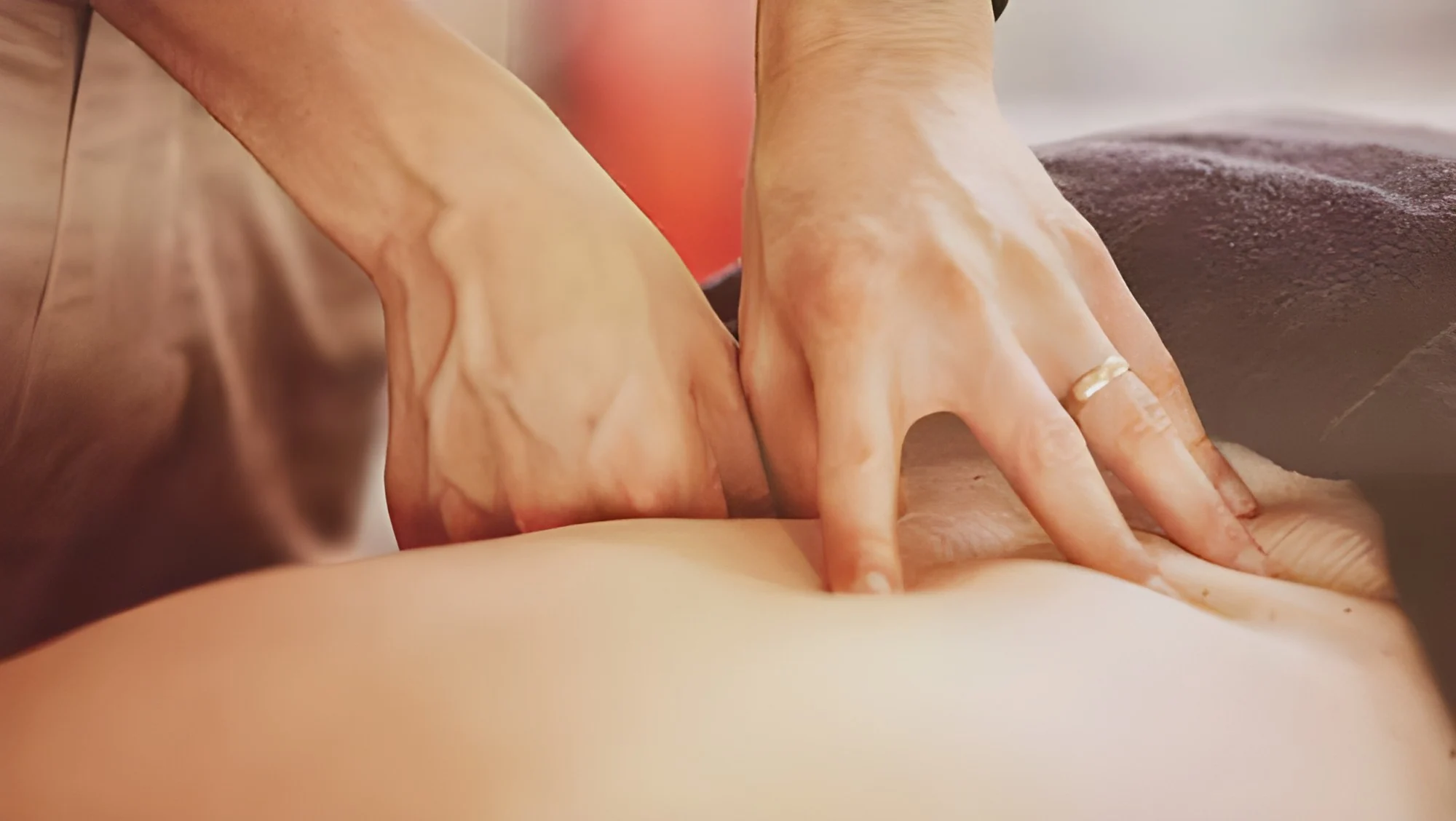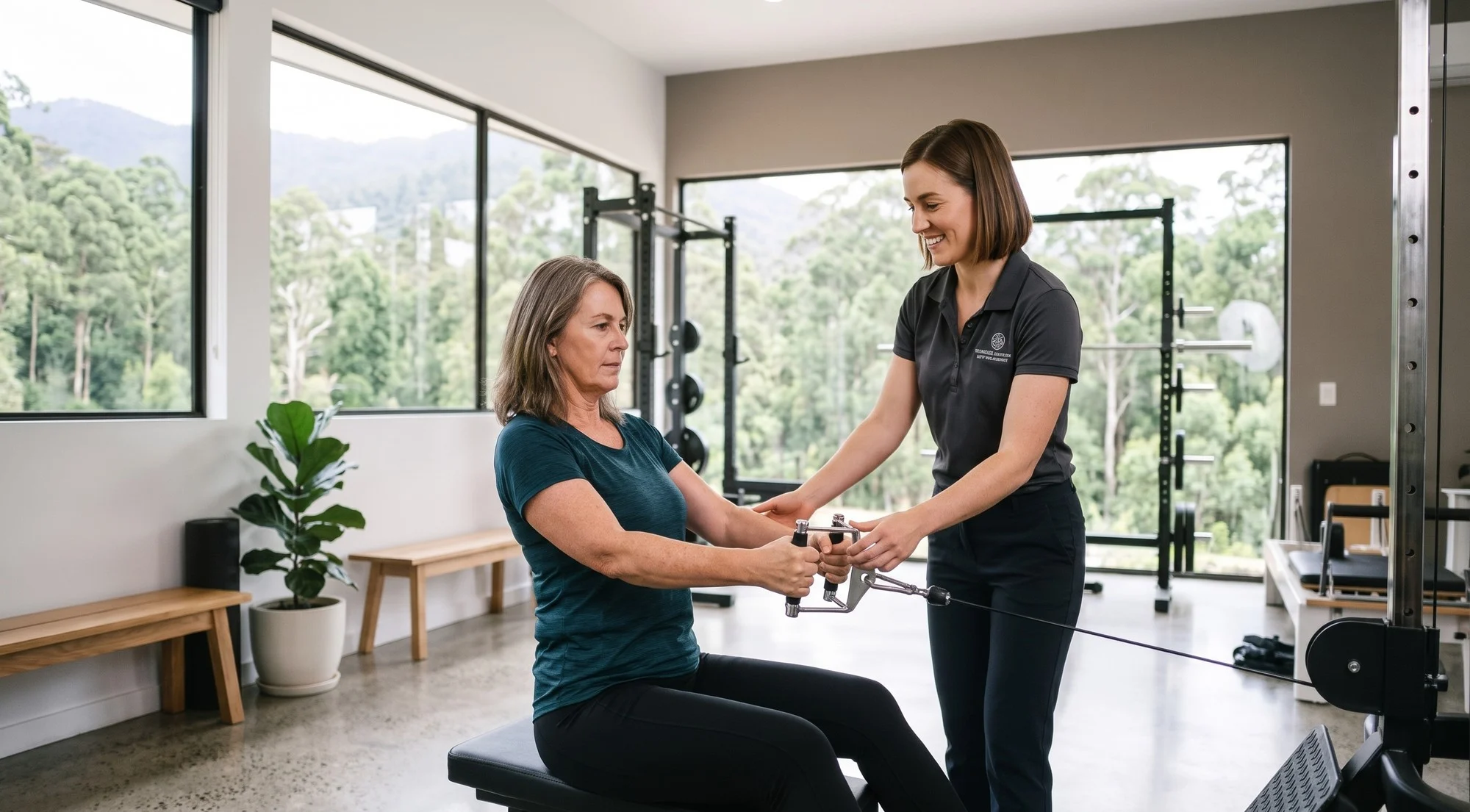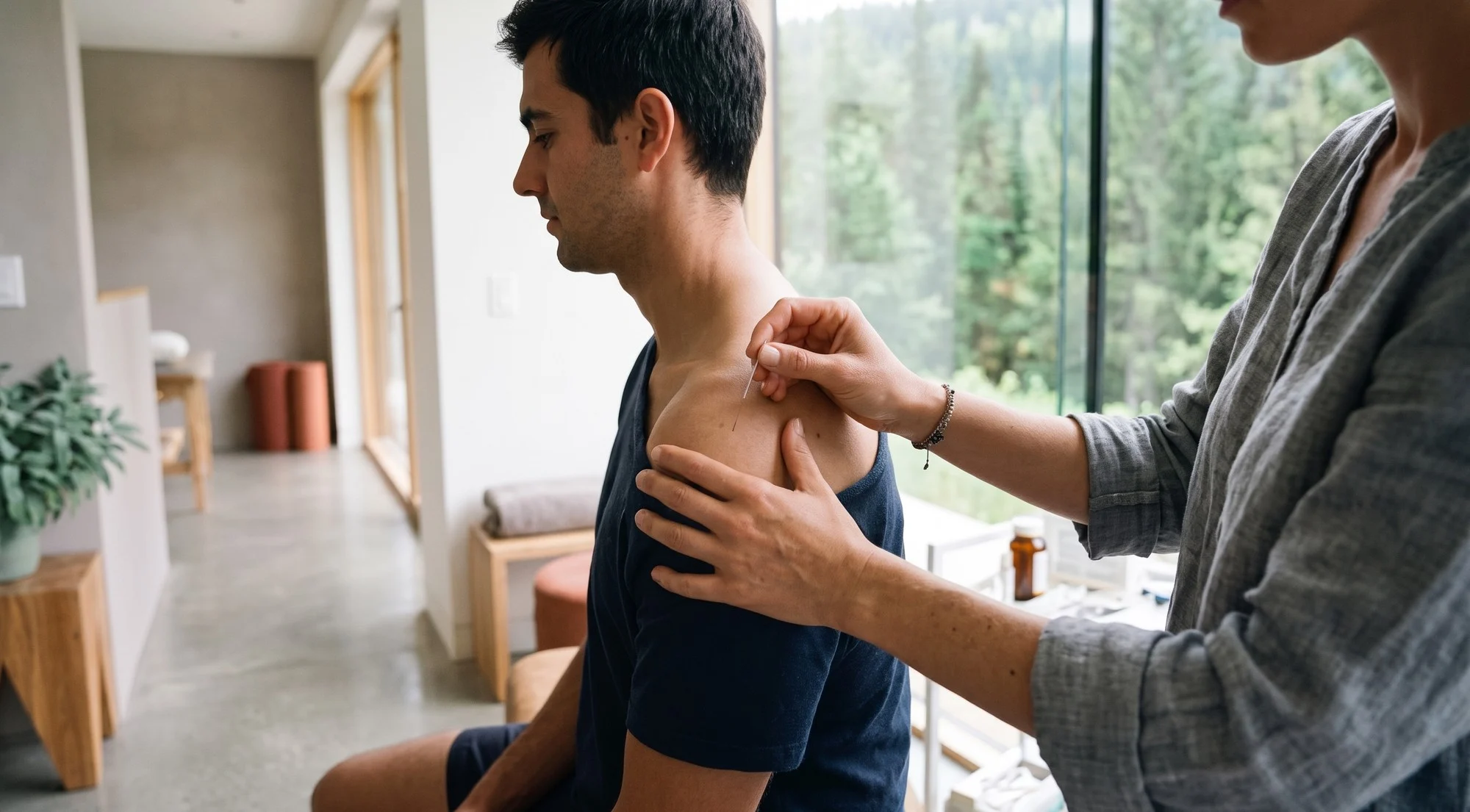
Pain on the outside of the hip that stops you sleeping on that side. An ache climbing stairs or getting out of the car. Tenderness when you press on the bony point of the hip. If that sounds familiar, you have probably been told it is bursitis, and you may well have been offered a cortisone injection.
For most people, the main problem is the gluteal tendons rather than the bursa. That matters, because it changes what actually fixes it.
Important: this is general information, not a diagnosis. Groin pain, pain after a fall, night pain unrelated to lying on the hip, or feeling generally unwell need a medical assessment.
What’s really going on
The gluteus medius and gluteus minimus tendons attach to the greater trochanter, the bony point on the outside of your hip. Bursae (small fluid-filled cushions) sit nearby.
Clinicians used to call almost all lateral hip pain “trochanteric bursitis”. Imaging studies have since shown that the gluteal tendons are usually the main source of pain, and the bursa is often involved as part of the same picture. The umbrella term is greater trochanteric pain syndrome, and gluteal tendinopathy is the most common cause within it.
It is especially common in women over 40, and around menopause. Hormonal changes affect tendons and connective tissue, a topic we cover in The Musculoskeletal Syndrome of Menopause.
Compression: the piece most people miss
The gluteal tendons dislike being compressed against the bone. Compression happens whenever the hip moves across the midline of your body, for example:
- Lying on your side with the top knee dropped down towards the bed
- Standing with your weight on one hip and the pelvis dropped (the “hip hitch” stance)
- Sitting with your legs crossed
- Deep, low chairs and car seats
Combine that compression with tendons that have lost strength, and you have the recipe for persistent lateral hip pain. It also explains why classic stretches like the cross-body “ITB stretch” often make it worse: they compress the very tendon you’re trying to settle.
What the evidence says: the LEAP trial
The best trial of treatments for gluteal tendinopathy was run in Brisbane and Melbourne. The LEAP trial randomised 204 people aged 35 to 70 with MRI-confirmed gluteal tendinopathy into three groups (Mellor et al., 2018):
- Education plus exercise: 14 physiotherapy sessions over eight weeks, covering load management advice and a progressive exercise programme
- A single corticosteroid injection
- Wait and see
At eight weeks, education plus exercise produced better global improvement than the injection, and both active treatments did better than waiting. At one year, education plus exercise still produced better global improvement than the injection, although pain levels were by then similar between those two groups.
In other words, the injection can help in the short term, but a physiotherapy-led programme of education and exercise was the most effective approach overall, and its benefits lasted.
What good rehab looks like
1. Reduce compression. This alone often helps sleep within a week or two:
- Sleep on your back, or on the painful side, or on the other side with a pillow between your knees so the top leg doesn’t drop
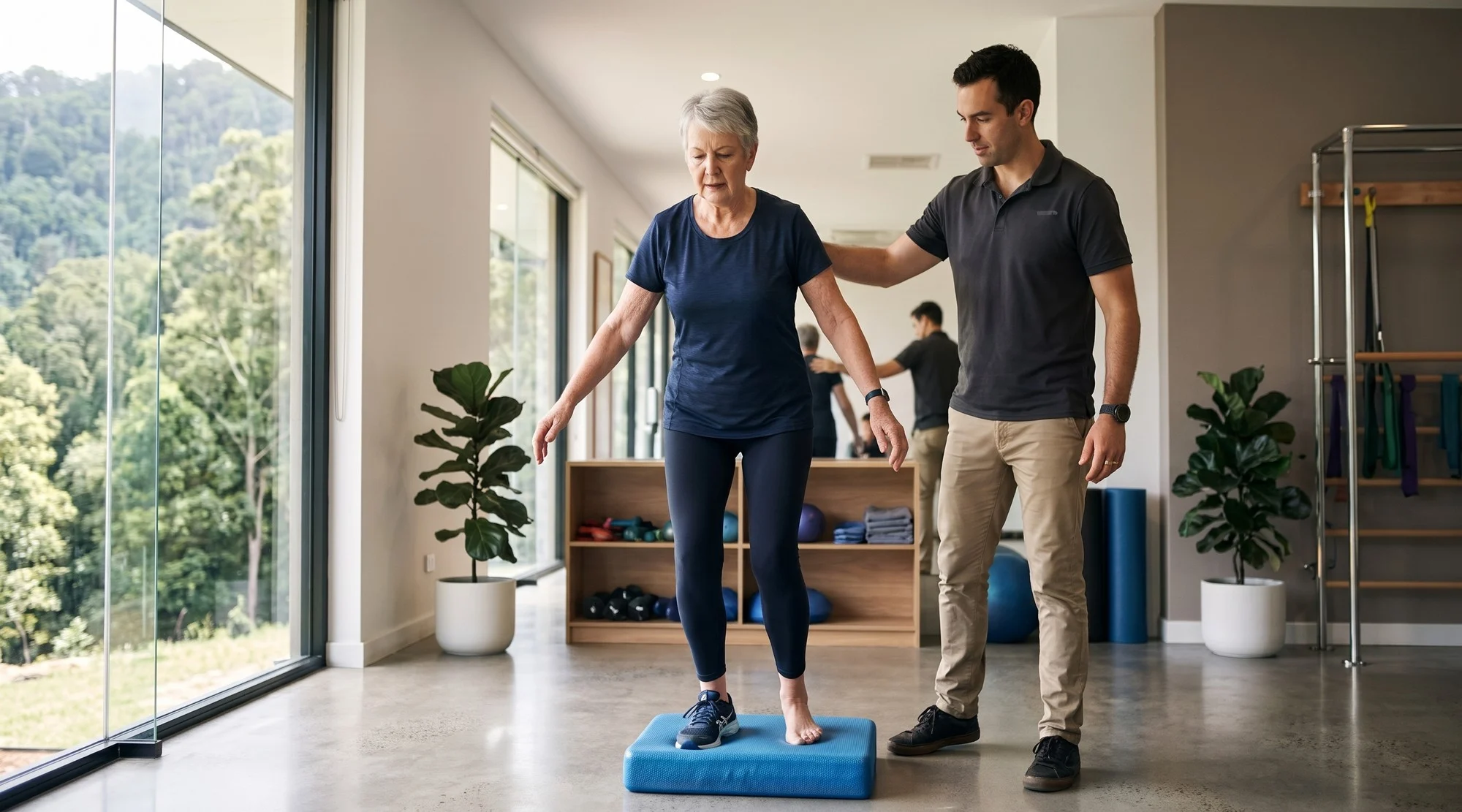
- Stand evenly on both feet rather than hanging on one hip
- Avoid crossing your legs and very low seats
- Stop stretching the outside of the hip
2. Isometric holds to settle pain. Gentle sustained contractions of the hip abductors, such as pressing the knee outwards against a band or wall without moving, can ease pain enough to start loading.
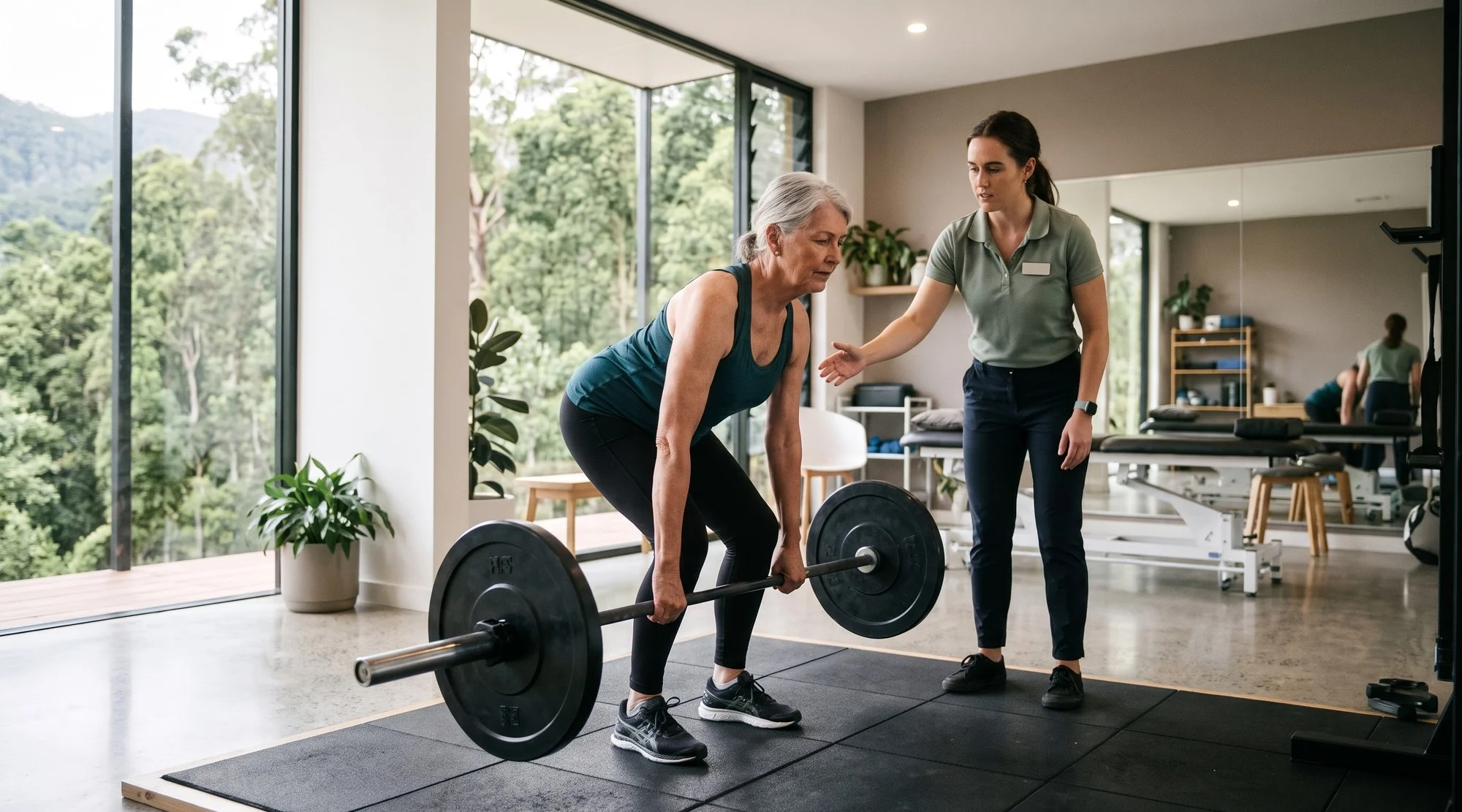
3. Progressive strengthening. Bridges, side-lying work kept out of the compressed position, step-ups, sit-to-stands, and then single-leg exercises. The aim is to rebuild the strength the gluteal muscles need to control your pelvis every time you stand on one leg.
4. Functional loading. Stairs, hills, walking distance and getting up from the floor, progressed steadily. On Tamborine Mountain, that often means the hills you walk every day.
Most people need around 8 to 12 weeks of consistent work, similar to the LEAP programme. Dry needling or hands-on treatment can help settle pain along the way. We discuss the relationship between gluteal trigger points and back and hip pain in Dry Needling for Low Back Pain: Gluteal Trigger Points.
Is it my hip joint or my tendon?
Gluteal tendinopathy is felt on the outside of the hip. Hip osteoarthritis usually causes pain in the groin and stiffness turning the leg inwards, such as when putting on socks. Some people have both. Our guide Hip Osteoarthritis: How to Buy Yourself a Decade Before the Replacement covers the joint side. Pain that travels down the back of the leg below the knee may be coming from the spine instead, as explained in Not All Sciatica Is a Disc.
Why this matters for long-term health
The gluteal muscles control your pelvis every time you stand on one leg, which is around 40% of every walking step. Weak gluteals mean poorer balance and a higher risk of falls. Rebuilding them doesn’t just fix the hip pain; it protects your independence. Our falls prevention exercise guide explains why.
Frequently asked questions
Should I have a cortisone injection for hip bursitis? It can give short-term relief, and that can be useful. But in the LEAP trial, education plus exercise produced better global improvement than an injection at eight weeks and one year. If you have an injection, use the pain relief to start loading.
What is the best sleeping position for hip bursitis? On your back, or on your side with a pillow between your knees so the top leg doesn’t drop across your body.
Should I stretch my hip? Avoid stretches that pull the leg across your body, like the classic ITB stretch. They compress the gluteal tendons and often aggravate pain.
How long does gluteal tendinopathy take to get better? Most people improve substantially over 8 to 12 weeks of a structured programme. Long-standing cases can take longer.
Do I need a scan? Not usually. Diagnosis is mainly clinical. Imaging is useful when the diagnosis is unclear or you’re not improving as expected.
Get your hip assessed on Tamborine Mountain
If the outside of your hip is keeping you awake or making stairs a chore, a thorough assessment will confirm the source and give you a clear plan. See our physiotherapy services and the full list of conditions we treat.
Longevity Physio Studio, Unit 2, 44 Southport Avenue, Tamborine Mountain QLD 4272. Open Monday 6am–5pm, Tuesday 7:30am–5pm and Friday 8am–4pm, with home visits across Mt Tamborine, Canungra, Jimboomba, Beaudesert and Beechmont. Call 0477 012 967 or book online.
Book a Hip AssessmentRelated reading
- Hip Osteoarthritis: How to Buy Yourself a Decade Before the Replacement
- Dry Needling for Low Back Pain: Gluteal Trigger Points and the Glute Strength Problem Behind Them
- The Musculoskeletal Syndrome of Menopause
- Falls Prevention Exercises for Over-65s: What the Evidence Says
References
- Mellor R, Bennell K, Grimaldi A, et al. Education plus exercise versus corticosteroid injection use versus a wait and see approach on global outcome and pain from gluteal tendinopathy: prospective, single blinded, randomised clinical trial. BMJ. 2018;361:k1662. doi:10.1136/bmj.k1662
- Grimaldi A, Mellor R, Hodges P, et al. Gluteal tendinopathy: a review of mechanisms, assessment and management. Sports Med. 2015;45(8):1107–1119.
Written by Dave Cvelbar, physiotherapist (AHPRA PHY0002223680), Longevity Physio Studio. Reviewed November 2026.