You’ve had a bone density scan and the report says “osteopenia” or “osteoporosis”. Perhaps you’ve been told to be careful, not to lift anything heavy, and to stick to walking.
That advice is common, well meant, and for most people out of date. This guide explains what your scan actually measures, the difference between osteopenia and osteoporosis, and what the research now says about lifting weights when your bones are low.
Important: this is general information, not personal medical advice. Decisions about bone medication belong with your GP or specialist. If you have had a recent fracture, sudden severe back pain, or height loss, see your doctor before starting a new exercise programme.
What your DXA scan measures
A DXA scan measures bone mineral density, usually at the lumbar spine and hip. The result that matters most is the T-score: how many standard deviations your bone density sits above or below that of a healthy young adult.
The definitions used in Australia come from the World Health Organization (RACGP and Healthy Bones Australia, 2023):
T-score | What it means |
|---|---|
−1.0 or above | Normal bone density |
Between −1.0 and −2.5 | Osteopenia (low bone density) |
−2.5 or below | Osteoporosis |
Two important points sit alongside the numbers:
- A minimal-trauma fracture means osteoporosis, whatever the T-score. If you break a bone from a fall from standing height or less, that is treated as osteoporosis even if your scan says osteopenia.
- Osteopenia doesn’t mean low risk. Because so many people are in the osteopenia range, a large share of fractures happen in people with osteopenia rather than osteoporosis. Your overall risk depends on age, previous fractures, falls, medications and other factors, which is why your GP may also use a risk calculator such as FRAX.
Low bone density is very common. Around 13% of Australian women aged 50 to 69 have osteoporosis, rising to around 43% of women over 70 (RACGP and Healthy Bones Australia, 2023).
Why bones need load
Bone is living tissue that responds to the forces placed on it. High forces, applied quickly, are the strongest signal for bone to maintain or build density. Walking, swimming, Pilates and light weights are excellent for heart health, balance and confidence, but on their own they don’t load the spine and hips enough to build bone. We cover this in detail in How to Actually Increase Bone Mineral Density.
Is heavy lifting safe with low bone density?
This is the question we’re asked most, and the best evidence comes from just down the road.
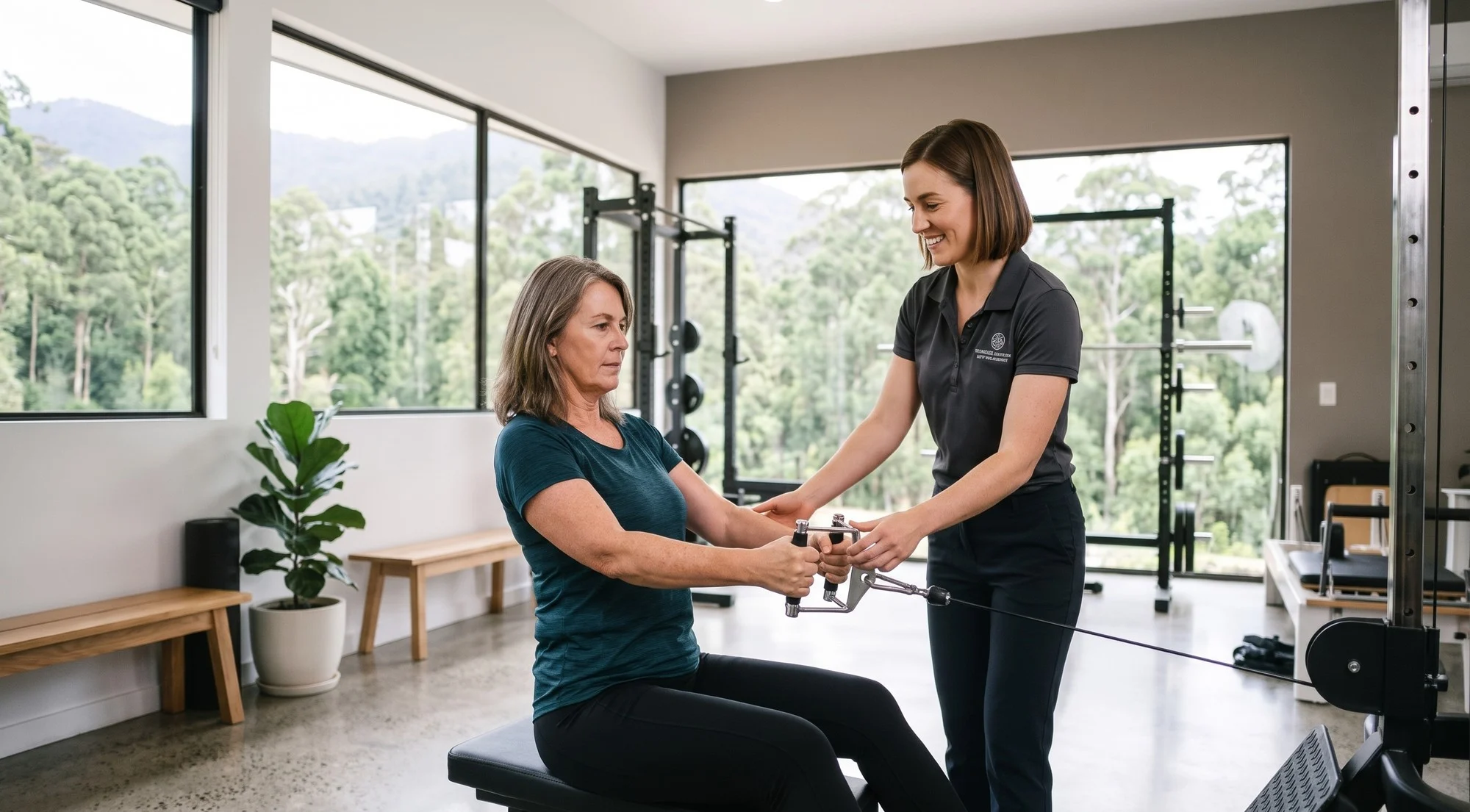
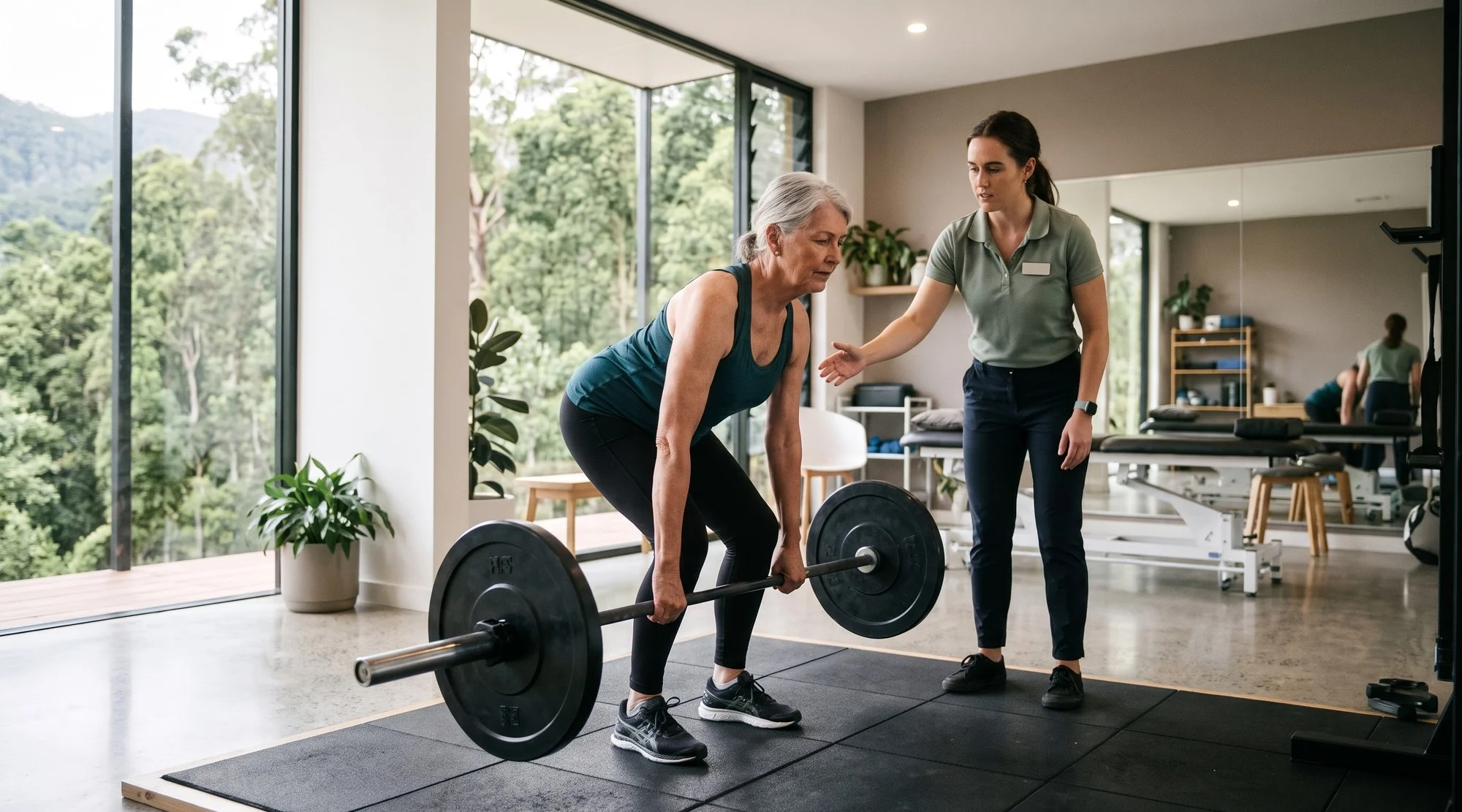
The LIFTMOR trial, run by Griffith University researchers on the Gold Coast, randomised 101 postmenopausal women with low bone mass (osteopenia or osteoporosis) to either supervised high-intensity resistance and impact training or a low-intensity home programme (Watson et al., 2018). The high-intensity group trained twice a week for 30 minutes, working up to around 80–85% of their maximum on the deadlift, back squat and overhead press, along with jumping chin-ups with drop landings, all under close supervision.
The results:
- Lumbar spine bone density rose 2.9% in the high-intensity group, compared with a 1.2% fall in the control group.
- Femoral neck (hip) bone density was maintained (+0.3%) in the high-intensity group, compared with a 1.9% loss in the control group.
- Strength, balance and functional performance improved more in the high-intensity group.
- Compliance was high, and there was only one adverse event: a minor lower back spasm.
The key words are supervised and progressive. The women in LIFTMOR were screened, taught technique carefully and built up gradually. That is a very different thing from picking up a heavy bar on your own.
What the UK consensus recommends
A 2022 consensus statement endorsed by the Royal Osteoporosis Society, “Strong, steady and straight”, set out exercise recommendations for people with osteoporosis (Brooke-Wavell et al., 2022). In summary:
- Strong: progressive resistance training on two to three days a week, plus impact exercise, to build bone strength.
- Steady: strength and balance training to reduce falls, especially for anyone at risk of falling.
- Straight: spinal extension exercises to support posture.
- Safety: avoid movements that combine heavy loading with repeated or sustained forward bending of the spine. People with vertebral fractures or multiple fragility fractures, or who are frail, should generally keep impact to around brisk-walking level and get specialist guidance.
- Health professionals should not restrict physical activity or exercise based on bone density numbers alone.
The forward-bending point is important and is often misunderstood. We explain it in Vertebral Compression Fractures and the Flexion Myth.
How we apply this in practice
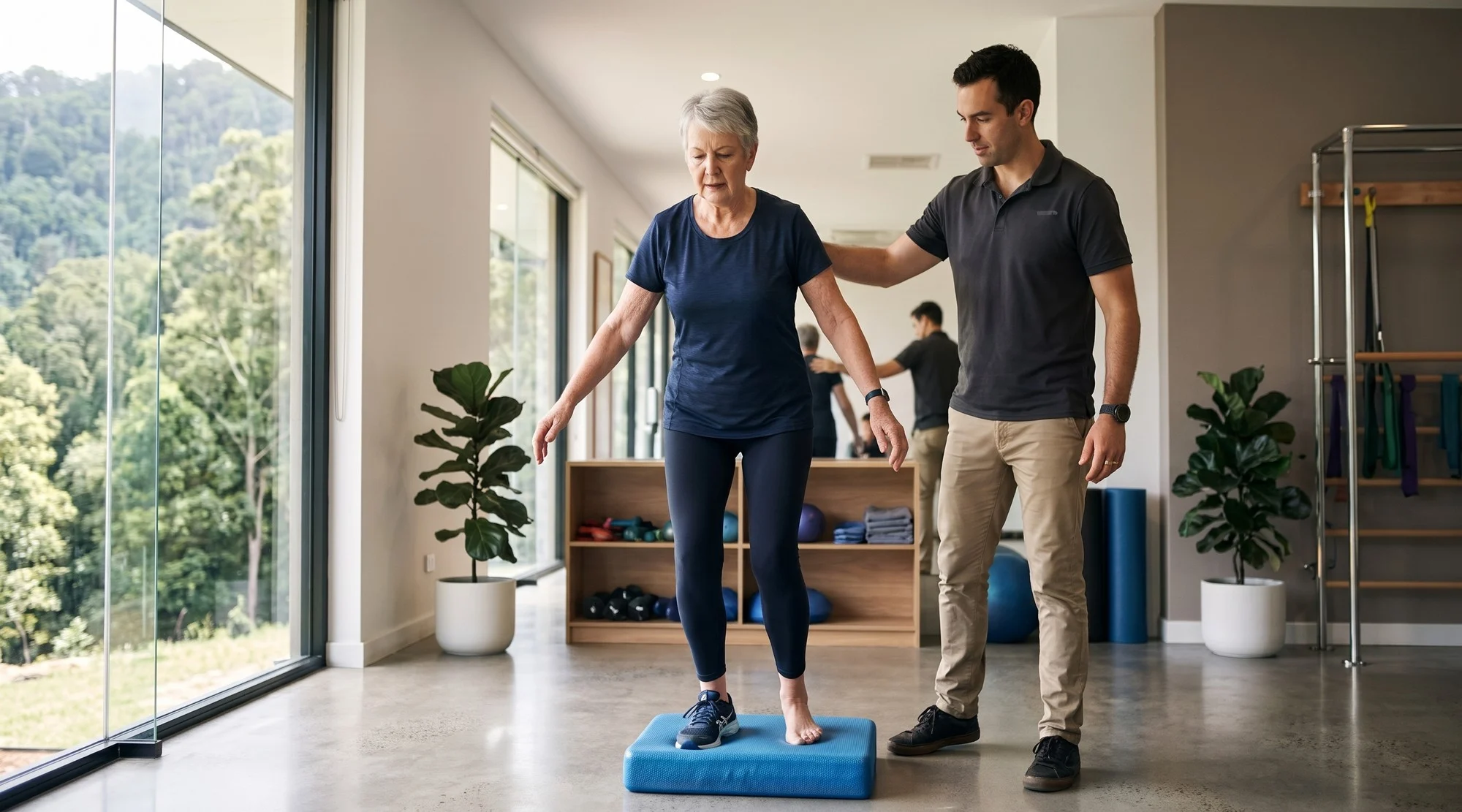
At Longevity Physio Studio, our Bone Forge class is built on the LIFTMOR approach. Before anyone lifts, we:
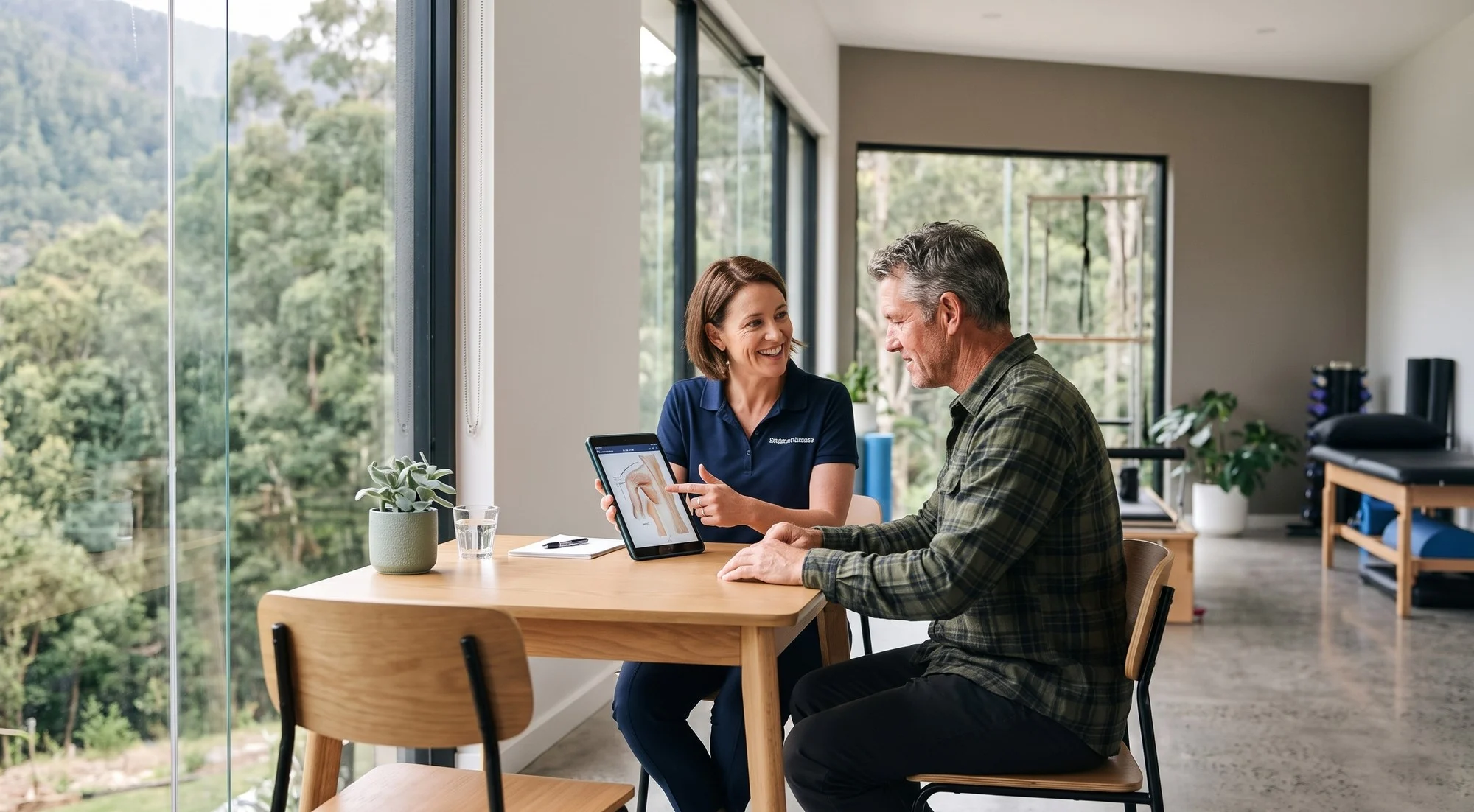
- Review your history and scan: previous fractures, falls, medications and your DXA results.
- Screen for vertebral fractures and red flags, and liaise with your GP where needed.
- Test strength, balance and movement so we know your starting point.
- Teach technique with light loads first, especially a neutral-spine hip hinge.
- Progress load gradually over weeks, under close supervision.
For people with a history of vertebral fractures or significant frailty, the programme is adapted, with more emphasis on strength, balance and extension work and less on impact.
Exercise works alongside medication, not instead of it
Exercise and bone medication do different jobs and are often best used together. Exercise also reduces falls, which cause most fractures in older adults. If your GP has recommended medication, keep that conversation going. The serious consequences of fractures are covered in The Hip Fracture Nobody Warns You About.
Frequently asked questions
Can osteopenia be reversed? Bone density can improve with the right loading, as LIFTMOR showed, but for most people the realistic goal is to stop or slow loss while getting stronger and less likely to fall.
Is walking enough for osteoporosis? Walking is great for general health and balance, but it isn’t enough load on its own to build bone at the spine and hip. Add progressive resistance and, where appropriate, impact training.
Should I avoid bending forward? Avoid repeated or sustained forward bending combined with heavy load, such as heavy sit-ups or lifting with a rounded back. Everyday bending is fine for most people. Learn to hinge from the hips.
Do I need a recent DXA scan to start? It helps, but it isn’t essential. Bring your most recent scan if you have one.
I have osteoporosis and a previous spinal fracture. Can I still exercise? Yes, and you should, but the programme needs to be tailored. Strength, balance and extension work are usually the starting point, with specialist guidance.
Start with a Bone Forge assessment
If you’ve been told you have osteopenia or osteoporosis and want to build stronger bones safely, book a Bone Forge assessment. You can read more about the class on our Longevity Classes page or see the full list of conditions we treat.
Longevity Physio Studio, Unit 2, 44 Southport Avenue, Tamborine Mountain QLD 4272. Open Monday 6am–5pm, Tuesday 7:30am–5pm and Friday 8am–4pm, with home visits across Mt Tamborine, Canungra, Jimboomba, Beaudesert and Beechmont. Call 0477 012 967 or book online.
Book a Bone Forge AssessmentRelated reading
- How to Actually Increase Bone Mineral Density: LIFTMOR and the Research Behind It
- Vertebral Compression Fractures and the Flexion Myth
- The Hip Fracture Nobody Warns You About
- Falls Prevention Exercises for Over-65s: What the Evidence Says
References
- Watson SL, Weeks BK, Weis LJ, Harding AT, Horan SA, Beck BR. High-intensity resistance and impact training improves bone mineral density and physical function in postmenopausal women with osteopenia and osteoporosis: the LIFTMOR randomized controlled trial. J Bone Miner Res. 2018;33(2):211–220. doi:10.1002/jbmr.3284
- Brooke-Wavell K, Skelton DA, Barker KL, et al. Strong, steady and straight: UK consensus statement on physical activity and exercise for osteoporosis. Br J Sports Med. 2022;56(15):837–846. doi:10.1136/bjsports-2021-104634
- The Royal Australian College of General Practitioners and Healthy Bones Australia. Osteoporosis management and fracture prevention in post-menopausal women and men over 50 years of age. 3rd edn. RACGP, 2023.
Written by Dave Cvelbar, physiotherapist (AHPRA PHY0002223680), Longevity Physio Studio. Reviewed November 2026.