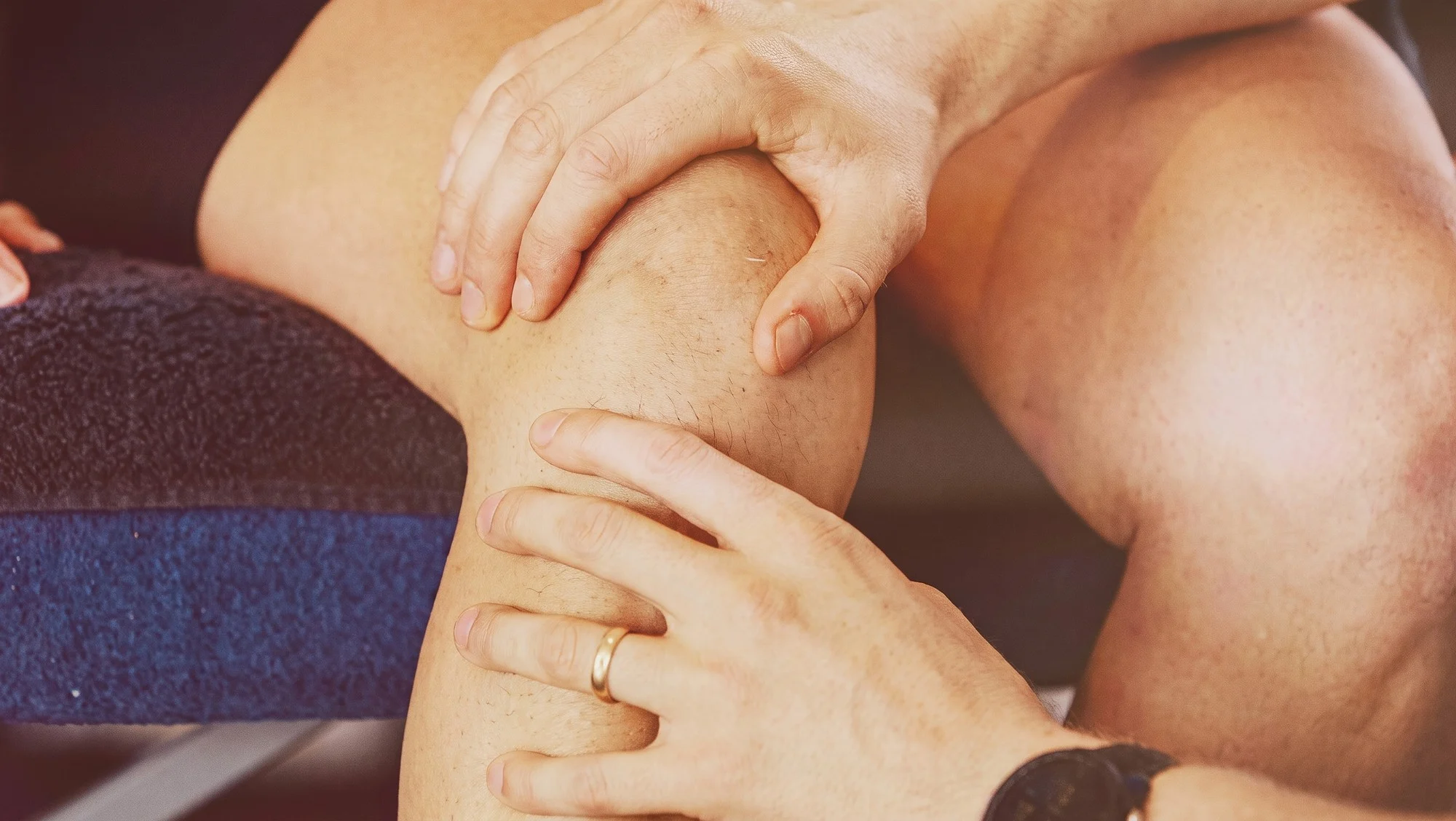
Knee pain is one of the most common reasons people come to see us, from weekend hikers and trail runners to long-time Tamborine Mountain locals who want to keep walking the hills well into their later years.
Whether it’s an ache after a walk, sharp pain on the stairs or swelling after activity, knee pain usually has an identifiable cause. In most cases, it responds well to the right combination of exercise, load management and hands-on treatment. This guide covers the common causes and what the evidence says about treating them.
Important: this is general information, not a diagnosis. See a doctor promptly if your knee is hot, red and swollen (especially with fever), if you can’t bear weight after an injury, if it locks and won’t straighten, or if you notice calf swelling and pain.
The common causes of knee pain
Knee osteoarthritis. The most common cause of knee pain over 50. Typically an ache with walking, stairs and getting up from a chair, plus morning stiffness that eases within half an hour. It is not simply “wear and tear”, and it is far more responsive to exercise than most people are told. See “Bone on Bone”: The Four Words That End More Walking Careers Than Knee Arthritis Does.
Patellofemoral pain (runner’s knee). Pain around or behind the kneecap with squatting, stairs, downhill walking or long periods of sitting. Common in runners and hikers of every age. See Patellofemoral Pain (Runner’s Knee): What Actually Fixes It.
Meniscus tears. In younger people they usually follow a twisting injury. In people over about 40, degenerative meniscus tears are very common and often found on scans of knees with no pain at all.
Ligament injuries. Sprains of the medial collateral ligament or a torn anterior cruciate ligament (ACL), usually after a twist, fall or sporting injury.
Tendon problems. Patellar tendinopathy (below the kneecap) and quadriceps tendinopathy (above it), usually linked to jumping, running or a jump in training.
Pain referred from elsewhere. Hip problems can refer pain to the knee, especially in older adults. A good assessment always checks the hip.
Exercise: the treatment with the best evidence
For knee osteoarthritis, exercise is the core treatment in every major guideline, including the Royal Australian College of General Practitioners’ guideline, which strongly recommends exercise and, where relevant, weight loss (RACGP, 2018).
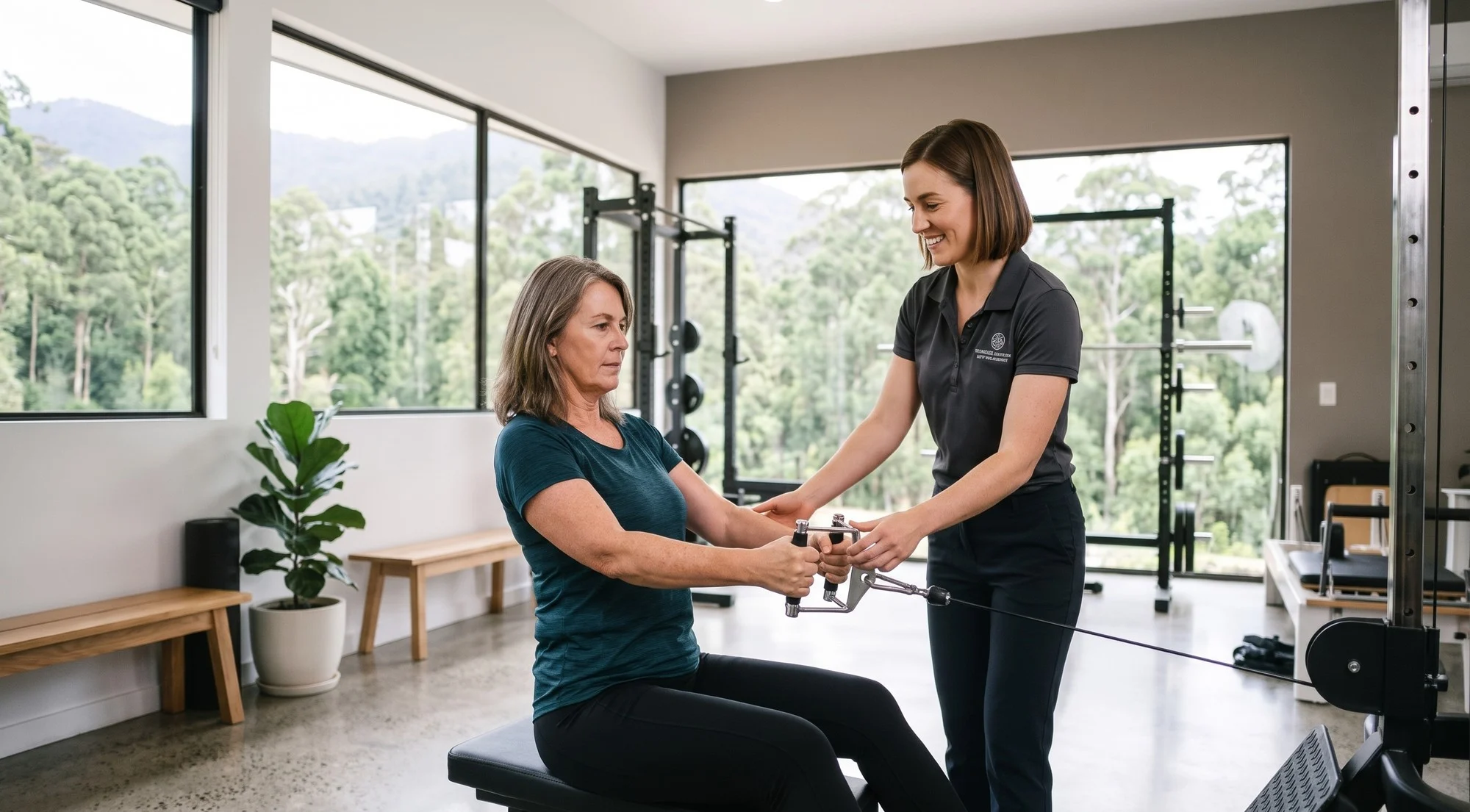
A Cochrane review of 54 trials found that land-based therapeutic exercise reduced knee osteoarthritis pain by around 12 points out of 100 and improved physical function by around 10 points out of 100 straight after treatment, with benefits still present two to six months after the programme ended (Fransen et al., 2015). That is similar to the effect of common anti-inflammatory medicines, without the side effects.
The programmes that work best are:
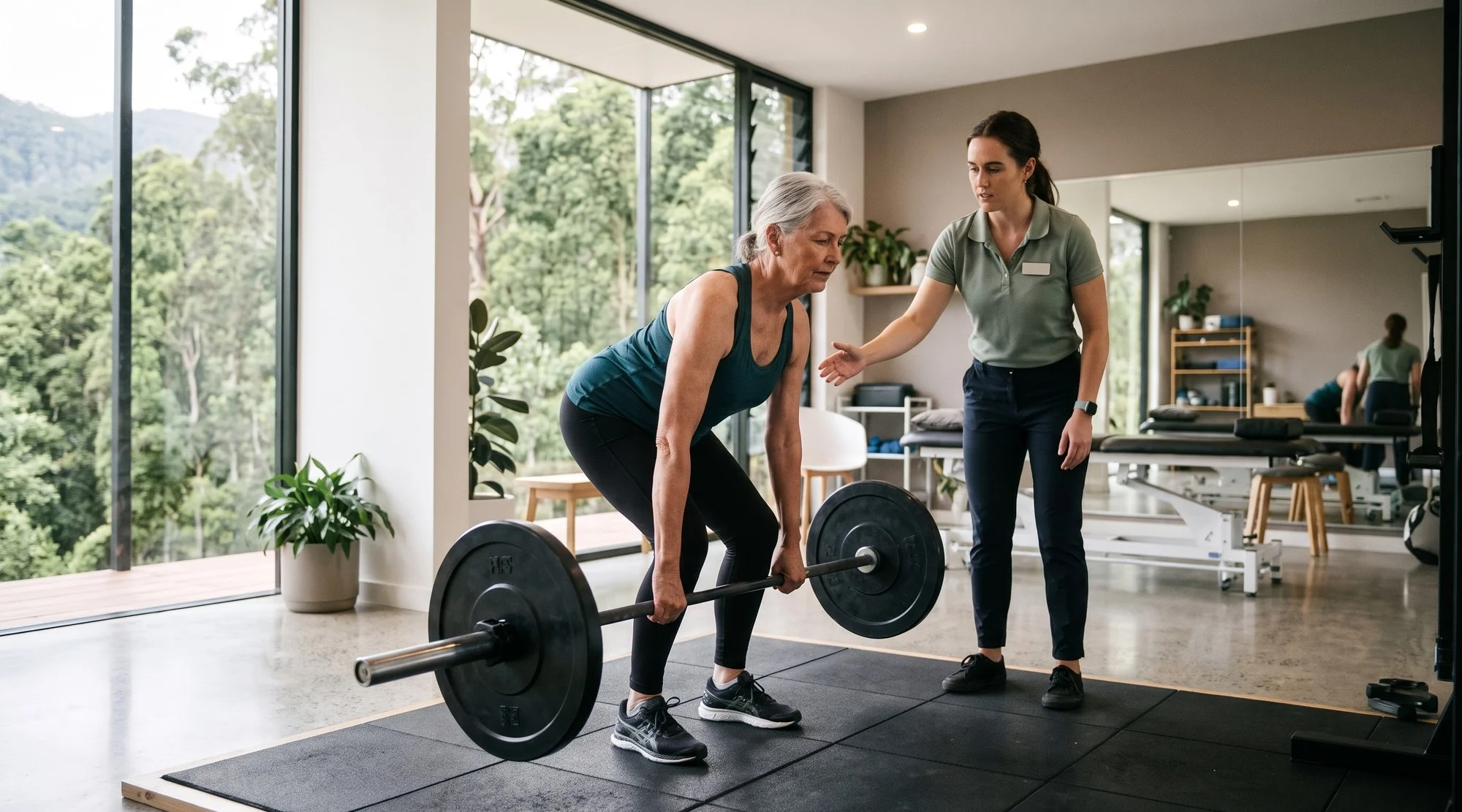
- Progressive: the load increases as you get stronger
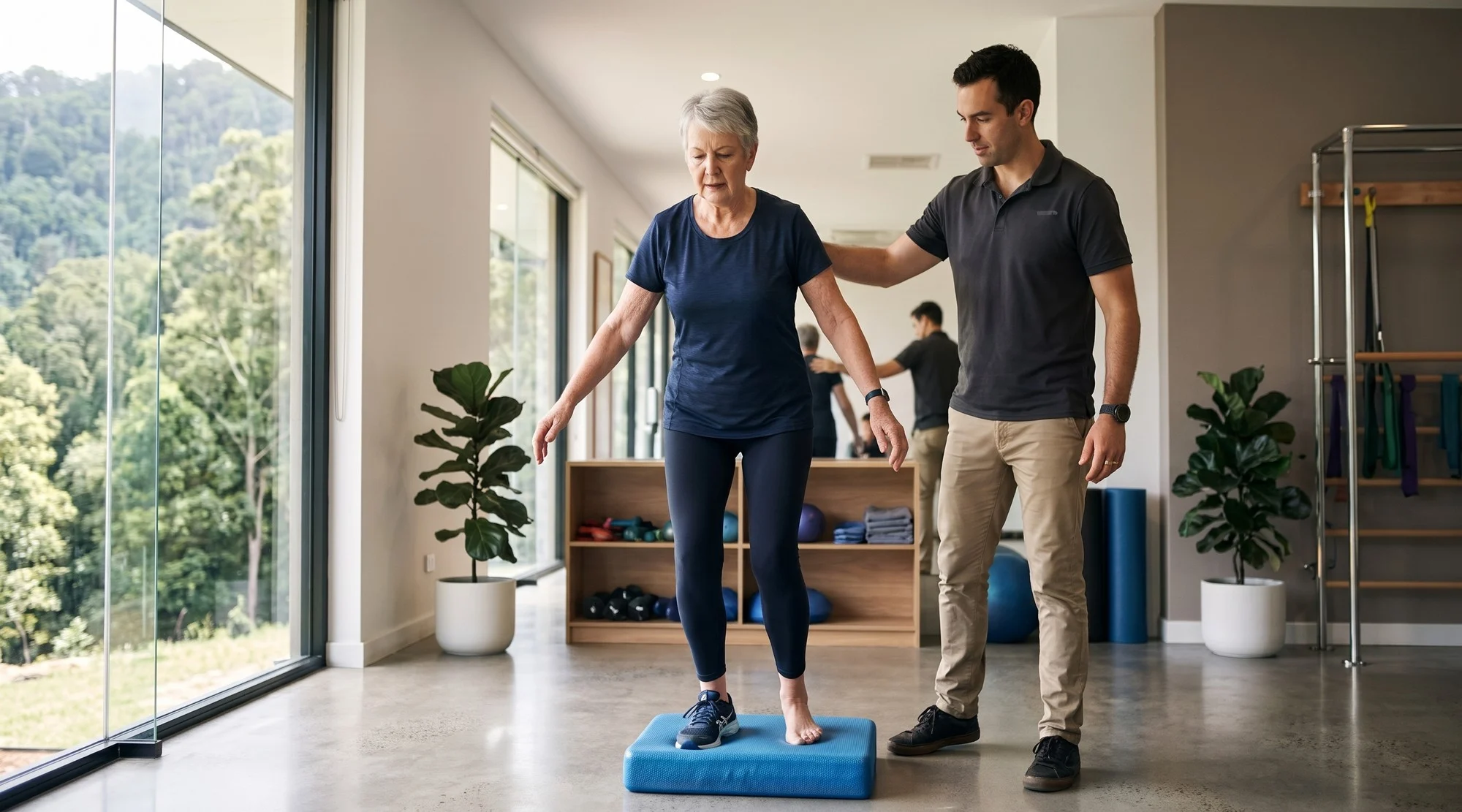
- Focused on the quadriceps and hips, plus balance and functional tasks such as sit-to-stand and step-ups
- Regular, usually two to three sessions a week for at least 8 to 12 weeks
- Supervised at first, so the load and technique are right
Some pain during exercise is acceptable, provided it settles within 24 hours and isn’t building week to week.
What about surgery?
Arthroscopy (keyhole surgery)
For degenerative knee problems, including osteoarthritis and degenerative meniscus tears, arthroscopic surgery is generally not recommended. In a Finnish trial, people with a degenerative meniscus tear who had arthroscopic partial meniscectomy did no better than those who had a sham (placebo) operation (Sihvonen et al., 2013). An international guideline panel made a strong recommendation against arthroscopic surgery for almost all people with degenerative knee disease (Siemieniuk et al., 2017). The RACGP guideline also recommends against arthroscopy for knee osteoarthritis.
There are exceptions, such as a knee that is genuinely locked by a displaced meniscal fragment, or certain acute injuries in younger people. These need an orthopaedic opinion.
Knee replacement
Knee replacement is a very effective operation for advanced osteoarthritis when exercise and other non-surgical care are no longer enough. In a Danish trial of 100 people eligible for knee replacement, replacement plus a non-surgical programme produced greater improvement at one year than the non-surgical programme alone, but with more serious adverse events. People in the non-surgical group also improved meaningfully (Skou et al., 2015).
The practical message: a good exercise programme is worth doing first, and if you do have a replacement, being stronger beforehand helps recovery.
Injections and other treatments
- Corticosteroid injections can give short-term relief for an osteoarthritic knee flare, which can be useful to get exercise going, but the effect wears off.
- Platelet-rich plasma (PRP) has mixed evidence, as we discuss in Dry Needling and PRP Injections: How to Think About the Choice.
- Braces, taping and insoles may help some people as add-ons, but they don’t replace strengthening.
Frequently asked questions
Is walking good for knee pain? For most people, yes. Walking is safe for knees with osteoarthritis and helps general health. Adjust distance and hills while you build strength.
Should I avoid stairs and squats? Not long term. Both are part of rehab. Start where your knee is comfortable and build up.
Do I need an MRI for knee pain? Usually not, particularly over 40. Scans often show changes that are common in knees without pain. Imaging is useful after significant injury or when the diagnosis is unclear.
Does running wear out your knees? Recreational running has not been shown to cause knee osteoarthritis in people with healthy knees, and strong legs protect the joint. If you run and have knee pain, the solution is usually to adjust load and build strength.
Get your knee assessed on Tamborine Mountain
If knee pain is limiting your walking, running, gardening or stairs, a thorough assessment will identify the cause and give you a clear plan. Once you’re moving well, our strength classes help keep your knees strong for the long term. See our physiotherapy services and the full list of conditions we treat.
Longevity Physio Studio, Unit 2, 44 Southport Avenue, Tamborine Mountain QLD 4272. Open Monday 6am–5pm, Tuesday 7:30am–5pm and Friday 8am–4pm, with home visits across Mt Tamborine, Canungra, Jimboomba, Beaudesert and Beechmont. Call 0477 012 967 or book online.
Book a Knee AssessmentRelated reading
- “Bone on Bone”: The Four Words That End More Walking Careers Than Knee Arthritis Does
- Patellofemoral Pain (Runner’s Knee): What Actually Fixes It
- Hip Osteoarthritis: How to Buy Yourself a Decade Before the Replacement
- Stop Just Stretching: You Need Strength Too
References
- The Royal Australian College of General Practitioners. Guideline for the management of knee and hip osteoarthritis. 2nd edn. East Melbourne: RACGP, 2018.
- Fransen M, McConnell S, Harmer AR, et al. Exercise for osteoarthritis of the knee. Cochrane Database Syst Rev. 2015;1:CD004376. doi:10.1002/14651858.CD004376.pub3
- Sihvonen R, Paavola M, Malmivaara A, et al. Arthroscopic partial meniscectomy versus sham surgery for a degenerative meniscal tear. N Engl J Med. 2013;369(26):2515–2524.
- Siemieniuk RAC, Harris IA, Agoritsas T, et al. Arthroscopic surgery for degenerative knee arthritis and meniscal tears: a clinical practice guideline. BMJ. 2017;357:j1982.
- Skou ST, Roos EM, Laursen MB, et al. A randomized, controlled trial of total knee replacement. N Engl J Med. 2015;373(17):1597–1606.
Written by Dave Cvelbar, physiotherapist (AHPRA PHY0002223680), Longevity Physio Studio. Reviewed November 2026.